TL;DR:
- Professional Mandarin courses should include business vocabulary, live interaction, and real workplace scenarios.
- Certified native instructors and flexible, mobile platforms are essential for effective learning.
- Live practice significantly enhances confidence and communication skills in business settings.
Choosing a credible online Mandarin course for business use is harder than it looks. Dozens of platforms promise fluency, but most are built for casual learners, not for professionals who need to negotiate contracts, lead meetings, or build client relationships in Mandarin. For Singaporean professionals, the stakes are real: Mandarin is widely spoken across Singapore’s business community and throughout the broader ASEAN region. This article walks you through exactly what to look for in an online Mandarin course, reviews the top options available, compares them side by side, and helps you match the right program to your specific workplace goals.
Table of Contents
- How to evaluate online Mandarin courses for professionals
- Top online Mandarin courses for Singaporean professionals
- Side-by-side comparison: Key features and pricing
- How to match the right course to your professional goals
- Why most professionals underestimate real-time interaction in language learning
- Ready to boost your business Mandarin skills?
- Frequently asked questions
Key Takeaways
| Point | Details |
|---|---|
| Prioritize real-time interaction | Business Mandarin success depends on courses that offer live interaction, not just recorded content. |
| Check instructor credentials | Choose courses with certified teachers experienced in workplace communication. |
| Match course to your goal | Select a program that fits your specific industry needs, schedule, and skill level. |
| Compare features transparently | Use side-by-side tables to assess flexibility, cost, and relevance for your workplace. |
How to evaluate online Mandarin courses for professionals
Not all online Mandarin courses are created equal, especially when your goal is professional fluency rather than tourist-level conversation. Before you sign up for anything, it pays to know which criteria actually move the needle for working adults in Singapore.
Here are the six most important factors to evaluate:
- Business-specific curriculum. A course built for professionals should cover vocabulary for meetings, email writing in Chinese, negotiation phrases, and industry-specific terminology. Generic vocabulary apps will not get you there.
- Certified and experienced instructors. Look for native Mandarin speakers who are qualified teachers, not just fluent speakers. Credentials matter, especially for business-appropriate tone and register.
- Real-time interactivity. Research confirms that real-time interactivity is key for intercultural competence in ASEAN contexts. Live sessions where you speak, respond, and get corrected in the moment are far more effective than pre-recorded videos.
- Platform flexibility and mobile access. Busy professionals need courses that work across devices and fit around unpredictable schedules. Check whether live classes are recorded for review and whether the platform works on mobile.
- Balance of self-study and guided practice. The best courses combine independent vocabulary work with instructor-led sessions. Too much of one without the other stalls progress.
- Red flags to avoid. Walk away from programs with no instructor credentials listed, vague learning outcomes, no trial class option, or suspiciously low prices with no explanation.
Pro Tip: Before committing to any course, ask for a demo or trial lesson. A single live class tells you more about teaching quality than any marketing page.
“The most effective language programs for working adults combine structured business content with live, interactive practice sessions that mirror real workplace communication.”
For a deeper look at what separates strong programs from weak ones, explore how to select an online language course and consider how the online vs face-to-face learning debate applies to your own schedule and learning style.
Top online Mandarin courses for Singaporean professionals
With evaluation criteria in place, let’s review the top courses that excel for Singaporean professionals looking to advance their business Mandarin skills.
Linda Mandarin (Online Zoom Classes)
Linda Mandarin has been training professionals in Singapore since 2003. Their online Zoom classes are structured around the HSK framework and adapted for business communication. Classes are small-group or private, led by certified native instructors fluent in English. Business Mandarin modules cover meetings, presentations, and workplace small talk.
Coursera (Mandarin Chinese Specializations)
Coursera offers university-backed Mandarin courses with video lectures, quizzes, and peer forums. The content is solid for beginners and intermediates, but live interaction is limited. Better suited for self-paced learners who supplement with other speaking practice.
italki
italki connects you directly with professional tutors for one-on-one sessions. You can filter by business Mandarin focus and schedule lessons at your convenience. Quality varies by tutor, so checking reviews and credentials carefully is essential.
HelloTalk
HelloTalk offers real-time language exchange but requires caution around the authenticity of native speaker partners. It works best as a supplement to a structured course rather than a standalone solution for business professionals.
Berlitz (Online Business Mandarin)
Berlitz provides instructor-led business language programs online. Their methodology emphasizes immersive conversation from lesson one. Pricing is on the higher end, but corporate packages are available for teams.
Key things professionals gain from top-tier platforms:
- Dedicated business vocabulary modules
- Flexible scheduling around work hours
- Progress tracking and structured syllabi
- Access to recorded sessions for review
- Peer interaction or tutor feedback on pronunciation
Pro Tip: Cross-reference any platform’s instructor bios with their stated credentials. A business Mandarin course taught by an unqualified native speaker is still an unqualified course.
Understanding the benefits of online Mandarin courses helps you set realistic expectations, while reviewing effective ways to master Mandarin can shape how you practice between sessions.
Side-by-side comparison: Key features and pricing
After overviewing individual top courses, see how they stack up on the qualities that matter most for workplace learning. Research shows that courses with live sessions and intercultural modules improve business communication, which is why interactivity carries so much weight in this comparison.
| Platform | Business focus | Live interaction | Instructor credentials | Pricing (approx.) | Best for |
|---|---|---|---|---|---|
| Linda Mandarin | High | Yes (Zoom, small group or private) | Certified native speakers | SGD 300 to 600 per term | Professionals at all levels |
| Coursera | Medium | No (forums only) | University faculty | USD 49 to 79 per month | Self-paced beginners |
| italki | Variable | Yes (1-on-1 tutoring) | Varies by tutor | USD 15 to 50 per hour | Flexible schedule learners |
| HelloTalk | Low | Yes (peer exchange) | None (peer-based) | Free or premium USD 9.99/month | Supplemental practice |
| Berlitz | High | Yes (instructor-led) | Certified instructors | USD 200 to 500 per month | Corporate teams |
What this table tells you. If live interaction and a business-specific curriculum are your priorities, Linda Mandarin and Berlitz lead clearly. For budget-conscious learners or those who prefer self-paced study, Coursera provides structure without live commitment. italki works well when you have a clear business focus and know how to screen for qualified tutors.
Cost transparency matters. Be cautious of platforms that list prices without explaining what is included. Some quote per-lesson rates but exclude materials, assessments, or progress reports.
For a broader view on how digital and traditional formats compare in terms of learning outcomes, this resource on online learning vs traditional is worth reading before you finalize your decision.
How to match the right course to your professional goals
Now that you can compare the best options, here’s a step-by-step guide for finding the course that will actually support your specific business communication goals.
Step 1: Define the exact skill gap. Are you struggling with meeting etiquette, phone calls with Mandarin-speaking clients, written correspondence, or casual workplace conversations? Each gap calls for a different focus.
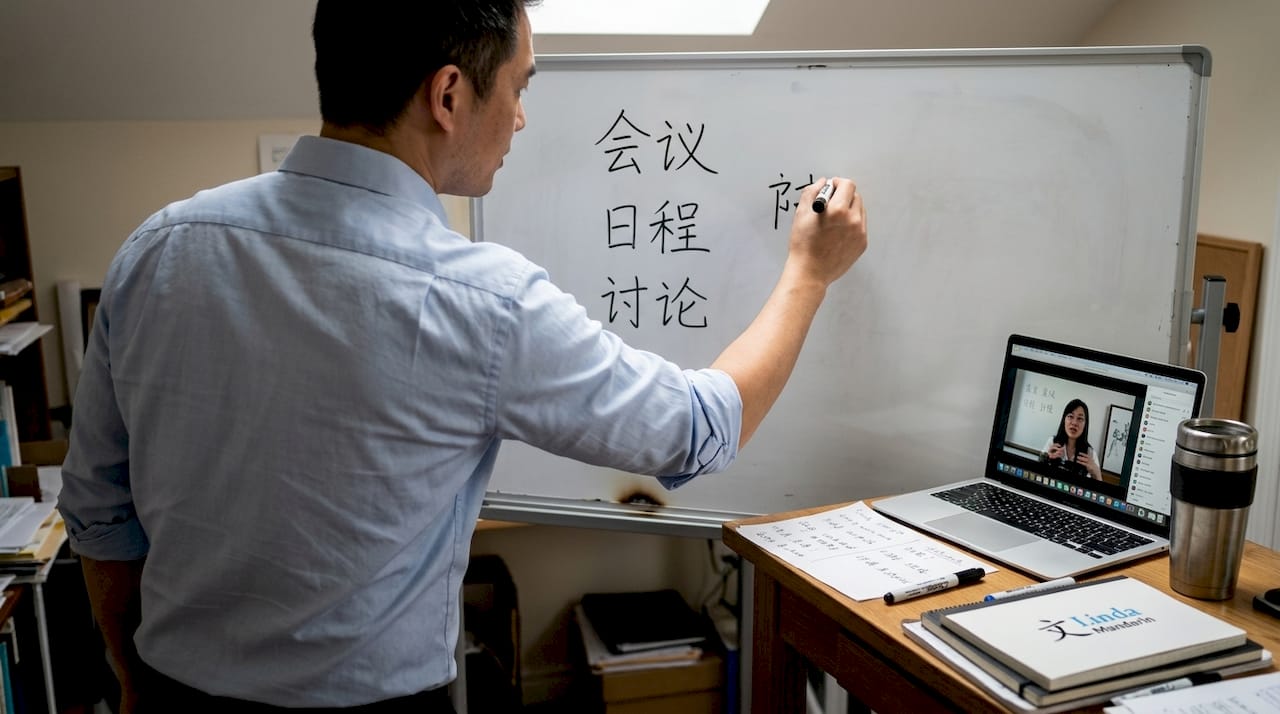
Step 2: Assess your current level honestly. Most platforms offer a free placement test. Skip it and you risk enrolling in content that is either too basic or too advanced to produce fast results.
Step 3: Match your scenario to a course type:
- Busy executives who travel frequently benefit most from private, on-demand sessions with a business-focused tutor, combined with mobile-accessible review tools.
- Mid-career switchers entering Chinese-facing industries need structured curricula with clear progression, ideally HSK-aligned with a business track overlay.
- Customer-facing staff need conversational fluency fast, which makes small-group live classes with role-play scenarios the most effective format.
ASEAN professionals gain most from real-time interactive courses designed around intercultural workplace scenarios, not generic lesson scripts.
Features that matter most by use case:
- For negotiation skills: role-play modules, instructor feedback on tone and phrasing
- For meeting etiquette: listening comprehension exercises and formal speech patterns
- For workplace small talk: conversational practice with native speakers in unscripted scenarios
“The clearer your goal before enrolling, the faster you will see results in actual workplace situations.”
Step 4: Plan your weekly commitment realistically. Two live sessions per week plus 20 minutes of daily vocabulary review is a sustainable baseline for most working professionals. Overcommitting leads to dropout.
For professionals who need maximum flexibility, exploring flexible online learning options shows how home-based study can still deliver structured, measurable progress.
Why most professionals underestimate real-time interaction in language learning
Here is what we have observed after training professionals in Singapore for over two decades: the majority of working adults who struggle with business Mandarin share one thing in common. They studied on their own. Apps, video courses, podcasts. They built vocabulary. They recognized characters. But when it came time to speak in a real meeting or negotiate a point across the table, they froze.
Passive learning builds recognition. Live interaction builds confidence. Those are two very different skills. The Mandarin learning advantages professionals seek, things like reading a room, adjusting your register mid-conversation, and recovering from a misunderstanding gracefully, only develop through practice with real people in real time.
The uncomfortable truth is that on-demand video courses feel productive but often create an illusion of progress. You can complete 40 hours of content and still be unable to navigate a supplier call in Mandarin. Singapore’s business environment is too fast and too relationship-driven to rely on passive learning alone. Live correction from a qualified instructor in a business context accelerates progress in ways no algorithm can replicate.
Ready to boost your business Mandarin skills?
If the criteria and comparisons above resonate, Linda Mandarin’s online programs are designed specifically to close the gap that generic platforms leave open. Whether you are a beginner building your foundation or an intermediate professional sharpening your boardroom Mandarin, there is a structured, instructor-led option that fits your schedule and goals.
Explore Linda Mandarin’s online Mandarin course for flexible, live Zoom sessions built around real business communication. Teams and organizations can benefit from the tailored Corporate Chinese Training program, while professionals who need accelerated progress should look at the Intensive Mandarin Course for professionals. All programs are led by certified native instructors and structured for measurable, workplace-ready outcomes.
Frequently asked questions
Can I become fluent in business Mandarin with an online course?
Fluency depends on your practice consistency and the quality of instruction, but courses with real-time interactivity can significantly accelerate your business communication skills. Live, instructor-led sessions are the single biggest predictor of usable workplace fluency.
How do I avoid scams or low-quality Mandarin programs online?
Always verify instructor credentials, check for transparent pricing, and look for verified live sessions before enrolling. Platforms that obscure risks of deception or lack institutional backing are worth avoiding entirely.
Are there courses tailored for business professionals in Singapore?
Yes, several platforms including Linda Mandarin offer specialized programs with business-specific curriculum designed around Singapore’s professional environment, from negotiation language to formal meeting etiquette.
How important is live practice for workplace Mandarin?
Live practice is essential. Real-time sessions build the kind of intercultural business competence that passive video learning simply cannot replicate, especially in Singapore’s fast-paced, relationship-driven business culture.