TL;DR:
- Studying Chinese culture provides essential insight into one of the world’s oldest continuous civilizations and its influence today.
- Engaging with both traditional customs and modern digital expressions helps learners develop practical cultural literacy for personal and professional growth.
Studying Chinese culture is the most direct path to understanding one of the world’s oldest continuous civilizations, a tradition spanning more than 3,000 years that still shapes global art, philosophy, business, and daily life. Whether you are preparing for a trip to China, pursuing academic research, or building professional relationships with Chinese-speaking partners, cultural knowledge gives you context that language alone cannot provide. The benefits of learning Chinese culture extend far beyond memorizing customs. They include sharper cross-cultural communication, stronger professional credibility, and a richer personal worldview. This guide explains why study Chinese culture matters and how to approach it with purpose.
Why study chinese culture: the core case
Chinese culture is defined by its unbroken continuity across more than three millennia, making it one of the few living civilizations that connects ancient philosophy directly to modern practice. Confucian ethics still shape workplace hierarchies in Shanghai boardrooms. Taoist principles appear in contemporary wellness movements worldwide. The Lunar New Year, practiced for over 3,500 years, is now celebrated on every continent.
What makes Chinese culture uniquely worth studying is its scope. It is not a single tradition but a layered system of philosophies, arts, festivals, and social codes that have evolved without losing their roots. Chinese cultural wisdom is defined by inclusivity and unity in diversity, offering frameworks that remain relevant for modern global governance and social harmony. That is a rare quality in any civilization.
The core elements of Chinese culture include:
- Philosophy: Confucianism, Taoism, and Buddhism form the intellectual backbone of Chinese social behavior and ethics.
- Language and writing: Chinese characters carry centuries of meaning within their structure, connecting speakers to literary and historical traditions.
- Festivals and rituals: Events like the Lunar New Year, Mid-Autumn Festival, and Dragon Boat Festival encode values around family, gratitude, and community.
- Arts and aesthetics: Calligraphy, ink painting, opera, and architecture reflect a visual language that communicates cultural identity.
- Cuisine: Regional food traditions are deeply tied to geography, medicine, and social ritual, not just taste.
Each of these elements connects to the others. Understanding one deepens your grasp of the rest.
How does modern china revive its traditional culture?
Chinese culture is not a museum exhibit. Traditional Chinese culture is experiencing a conscious resurgence, integrating heritage with globalization rather than replacing one with the other. This shift is most visible among younger generations.
88.7% of young Chinese actively promote traditional culture, with 91.4% seeing international potential in what is known as “China-chic” intellectual property. That statistic signals something significant: the next generation of Chinese citizens sees cultural heritage as a global asset, not a relic. They are exporting it through fashion labels that blend Tang dynasty aesthetics with streetwear, through web novels rooted in classical mythology, and through short-form video content that teaches traditional crafts to millions of viewers.
Social media platforms like Douyin (the Chinese version of TikTok) have become primary vehicles for this revival. Hanfu, the traditional Han Chinese clothing style, has gone from a niche historical interest to a mainstream fashion movement with dedicated communities across Asia. Traditional tea ceremony culture has found new audiences through lifestyle content creators who frame it as mindfulness practice for modern life.
“Chinese culture is a living, evolving reality reshaped by younger generations via digital content. Going beyond textbooks to contemporary digital culture enhances learning relevance.” — Young Chinese breathe new life into traditional culture
This matters for learners because it means your study of Chinese culture does not have to be purely historical. Engaging with contemporary Chinese digital culture, music, film, and fashion gives you a real-time window into how traditions are being reinterpreted and why they still resonate.
Pro Tip: Follow Chinese lifestyle and cultural creators on platforms like Bilibili or YouTube to see how traditions like calligraphy, tea culture, and Hanfu are being reframed for modern audiences. This is one of the fastest ways to build cultural intuition outside the classroom.
What are the benefits of studying chinese culture?
The practical advantages of cultural literacy in Chinese traditions are concrete and measurable. Here are the most significant ones, ranked by their impact on real-world outcomes.
-
Stronger cross-cultural communication. Cultural literacy prevents professional missteps and builds rapport beyond what language fluency alone can achieve. Knowing that direct disagreement is often avoided in Chinese professional settings, for example, helps you read a conversation accurately rather than misinterpreting silence as agreement.
-
Deeper language acquisition. Language and culture are inseparable. Understanding concepts like Mianzi (face, or social reputation) and indirect communication styles is required to build genuine rapport with Chinese speakers. Without that cultural layer, even grammatically correct Mandarin can come across as tone-deaf.
-
Cognitive development. Learning Chinese characters strengthens memory and visual-analytical skills. The difficulty of the script is not a barrier. It is cognitive training that signals resilience and dedication to employers and peers.
-
Global health and wellness literacy. Traditional Chinese Medicine is now integrated into health practices across 196 countries and regions. Understanding its philosophical foundations, including the concepts of Qi, Yin-Yang balance, and holistic body systems, helps you engage meaningfully with a medical tradition that affects hundreds of millions of people.
-
Academic and research credibility. For researchers in history, political science, economics, or international relations, cultural literacy is a prerequisite. China’s policy decisions, social movements, and economic strategies are deeply informed by cultural values. Reading them without that context produces shallow analysis.
-
Personal enrichment. Appreciating Chinese heritage through its art, literature, and philosophy expands your intellectual range. The poetry of Du Fu, the strategic philosophy of Sun Tzu’s The Art of War, and the architectural logic of the Forbidden City each offer perspectives that have no equivalent in Western traditions.
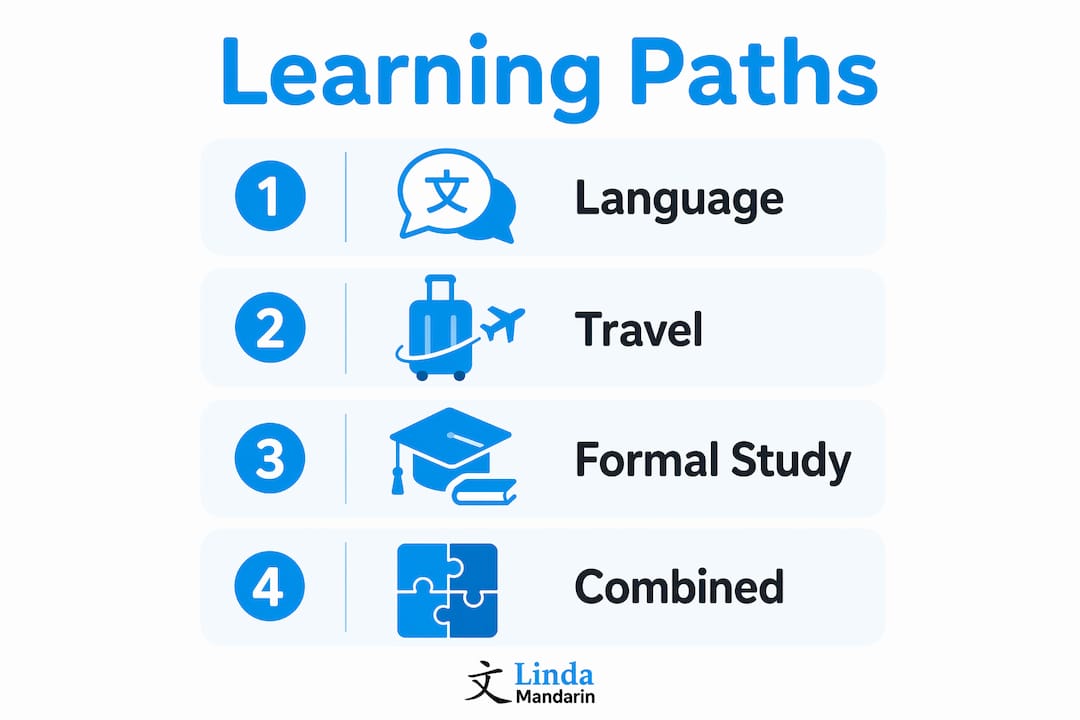
Language, travel, or formal study: which path works best?
The three most common ways to deepen your understanding of Chinese customs are language study, travel, and formal academic programs. Each has distinct strengths and limitations.
| Learning Method | Strengths | Limitations | Best For |
|---|---|---|---|
| Language study | Unlocks cultural nuance through vocabulary and context | Requires consistent practice and structured guidance | Adults building professional or conversational skills |
| Travel to China | Immersive, sensory, and immediate cultural exposure | Limited depth without prior cultural preparation | Travelers with some baseline cultural knowledge |
| Formal academic programs | Structured, in-depth, and historically grounded | Can be theoretical without real-world application | Researchers and students pursuing academic credentials |
Language study is the most transferable method. When you learn Mandarin with cultural context built into the curriculum, you gain tools you can use immediately in professional and social settings. The pros of learning Chinese extend well beyond communication. They include cultural access that travel alone cannot replicate.
Travel provides the most visceral learning experience. Walking through a wet market in Chengdu, attending a temple fair during the Lunar New Year, or sharing a meal where the host insists on serving you first all teach cultural values that no textbook can fully convey. The limitation is that without prior preparation, many of these moments pass without meaning. You see the behavior but miss the why.
Formal academic programs offer depth and rigor. Universities like Peking University, the National University of Singapore, and institutions offering Chinese studies programs provide structured frameworks for understanding Chinese history, philosophy, and society. The gap is often practical application. Academic knowledge needs real-world practice to become usable cultural competence.
Pro Tip: Combine methods deliberately. Study Mandarin with a structured program, then use travel or digital media to test and reinforce what you have learned. Cultural fluency builds fastest when you cycle between structured input and unstructured exposure.
How does cultural knowledge improve your global interactions?
Cultural literacy in Chinese traditions creates a competitive advantage in professional and personal contexts that most people underestimate until they experience a costly misunderstanding.
In business settings, Chinese business etiquette is built around relationship-first principles. The concept of Guanxi, meaning a network of trusted relationships, determines how deals are made, how introductions happen, and how trust is built over time. Professionals who understand Guanxi know that a business dinner is not a formality. It is a trust-building exercise that often matters more than the formal meeting that follows.
In personal relationships, understanding Chinese customs around gift-giving, dining hierarchy, and family obligations prevents unintentional offense. Bringing a clock as a gift in Chinese culture, for example, carries associations with death. Knowing this before you visit a Chinese colleague’s home is the difference between a warm welcome and an awkward silence.
The impact of Chinese culture on society is also visible in international networking. As China’s economic and cultural influence grows, professionals who can engage authentically with Chinese counterparts hold a real advantage. That authenticity comes from cultural knowledge, not just language skill.
- Understanding Mianzi prevents you from publicly correcting or embarrassing a Chinese colleague, which can permanently damage a professional relationship.
- Knowing the significance of the tea ceremony in formal meetings signals respect and attentiveness to your hosts.
- Recognizing indirect communication patterns helps you identify when “we will consider it” means “no” and when it means genuine interest.
Key takeaways
Studying Chinese culture builds practical competence across professional, academic, and personal domains by connecting language, history, and living tradition into a single, usable framework.
| Point | Details |
|---|---|
| Culture and language are inseparable | Understanding concepts like Mianzi and Guanxi is required for genuine fluency and relationship-building. |
| Modern culture is actively evolving | 88.7% of young Chinese promote traditional culture, making digital engagement a valid learning tool. |
| Cultural literacy prevents costly mistakes | Knowing etiquette around gifts, dining, and communication protects professional and personal relationships. |
| Multiple learning paths exist | Language study, travel, and formal programs each offer distinct advantages best used in combination. |
| Global reach of Chinese traditions | Traditional Chinese Medicine is practiced in 196 countries, showing the worldwide relevance of cultural knowledge. |
What i have learned from studying chinese culture beyond the classroom
The most common mistake I see learners make is treating Chinese culture as a checklist. They learn a few festival dates, memorize that red means good luck, and consider themselves culturally prepared. That surface-level approach fails the moment you sit across from a Chinese business partner or navigate a family dinner in Beijing.
What actually changed my understanding was engaging with the philosophy behind the customs. When you understand that Confucian values place collective harmony above individual expression, the indirect communication style stops feeling evasive and starts feeling logical. When you understand that tea culture is rooted in Taoist principles of presence and simplicity, a tea ceremony stops feeling like a slow ritual and starts feeling like a deliberate act of respect.
The modern resurgence of traditional Chinese culture has also shifted how I think about what is worth studying. The assumption that “traditional” means static is wrong. The young Chinese creators reviving Hanfu fashion, classical poetry, and traditional crafts are not preserving a museum. They are making a living argument that ancient frameworks remain relevant to modern life. That argument is worth taking seriously.
My advice: approach Chinese culture with genuine curiosity rather than instrumental intent. Learn it because it is intellectually rich, not just because it is professionally useful. The professional benefits will follow. The personal enrichment is the real reward.
— Paul
Start learning chinese culture with linda mandarin
If this article has made you want to go deeper, Linda Mandarin offers the structured path to get there. Located at 10 Anson Road, Level 22, International Plaza, Singapore 079903, right above Tanjong Pagar MRT, Linda Mandarin has been training adult learners and professionals since 2003.

The school’s Chinese culture training program is designed specifically for adults who want to understand the cultural context behind the language, covering business etiquette, social customs, and the traditions that shape modern Chinese society. For those who want to combine cultural knowledge with practical Mandarin skills, the adult Mandarin course levels range from beginner conversational to advanced business Mandarin, with group, private, and online Zoom options available. Cultural fluency and language skill build each other. Linda Mandarin gives you both.
FAQ
What does studying chinese culture actually involve?
Studying Chinese culture covers philosophy, language, arts, festivals, social customs, and business etiquette. It includes both historical traditions and contemporary practices shaped by modern Chinese society.
How does cultural knowledge improve mandarin language learning?
Cultural concepts like Mianzi and indirect communication are inseparable from language fluency. Without cultural context, even grammatically correct Mandarin can fail to build genuine rapport with native speakers.
Why appreciate chinese heritage if i am not planning to visit china?
Chinese traditions now influence global health, business, and the arts across more than 190 countries. Cultural literacy improves professional interactions, personal relationships, and intellectual understanding regardless of whether you travel.
Is chinese culture relevant to modern business?
Chinese business culture is built around Guanxi and Mianzi, relationship and reputation frameworks that directly shape how deals are made. Professionals who understand these concepts negotiate and communicate more effectively with Chinese counterparts.
What is the fastest way to build chinese cultural knowledge?
Combining structured language study with exposure to contemporary Chinese digital content, such as film, social media, and lifestyle creators, builds cultural intuition faster than either method alone.