The confirmed HSK test dates in Singapore for 2026 are Saturday, March 14; Saturday, June 27; Saturday, September 12; and Saturday, December 12, with registration deadlines falling roughly six to seven weeks before each sitting. All four dates cover levels 1 through 6, plus the HSKK speaking test in most sittings, and registration runs through the local test centre or the official ChineseTest portal.
TL;DR:
- Registration for each 2026 HSK sitting in Singapore opens two to three months before the test date and closes roughly six to seven weeks prior, so early registration is essential to secure a seat.
- The most popular levels, particularly HSK 3 and HSK 4, tend to fill quickly, often before the official registration deadline, requiring candidates to register well in advance.
- December results are released more than a month after the test, making September sittings more suitable for deadlines in late December or early January.
- The Crestar assessment centre at Orange Grove Road is the only official testing location, and candidates should confirm seat availability directly with them, especially for HSKK components.
- Fees differ by level and component, with higher levels costing more and separate fees for the speaking test, highlighting the importance of timely payment and registration to avoid losing a place.
Table of Contents
- 2026 HSK Exam Schedule Singapore: Dates, Deadlines, and Results
- Where to Take the HSK in Singapore and How to Contact Local Centres
- HSK Levels, Format, and What HSK 3.0 Changes Mean for 2026
- How to Register for a 2026 HSK Test in Singapore, Step by Step
- HSK Test Fees in Singapore by Level, Plus Payment and Refund Notes
- Preparing for the HSK in Singapore: Classes, Speaking Practice, and Study Tips
- What to Expect on Test Day and When Results Arrive
- Health and Safety Protocols on HSK Test Days in Singapore
- What Paul Sees Adult Students Get Wrong
- Get HSK-Ready With Linda Mandarin’s 2026 Prep Courses
- Sources
- FAQ
2026 HSK Exam Schedule Singapore: Dates, Deadlines, and Results
Planning around four fixed Saturdays a year sounds simple until you miss a registration window by a week and have to wait three months for the next shot, a common challenge identified in tuition centres’ local enrolment behaviour. That is the single biggest planning mistake adult candidates make, and it is entirely avoidable once you have the dates in front of you.
The 2026 HSK test schedule for Singapore runs as follows:
Every deadline sits between six and seven weeks ahead of the actual test date, which is tighter than most candidates expect. Registration windows typically open two to three months before each Saturday, and popular levels, especially HSK 3 and HSK 4 sittings tied to university or job applications, tend to fill their seats before the official cut-off.
If you are targeting the March sitting, for example, that means getting your registration in well before the end of January rather than waiting until the deadline week. The HSK Crestar centre page confirms these same four dates and lists both L1 to L6 and oral test availability for each sitting, which is useful if you want a second source before you commit to a date.
One planning quirk worth flagging: the December 12 results only come out on January 15, 2027, more than a month later. If you need results for a job application, scholarship, or graduate program deadline that falls in late December or early January, the September sitting is the safer bet. Its results land by October 19, giving you nearly three months of buffer before year end.
Where to Take the HSK in Singapore and How to Contact Local Centres
Singapore’s authorized HSK testing runs through the Crestar HSK Education and Assessment Centre, located at 30 Orange Grove Road, #07-00, RELC Building, Singapore 258352. This is the centre that publishes the 2026 schedule, processes local registrations, and administers both the written and oral components on test day.
A few practical points before you register:
- Crestar’s own site is the fastest way to confirm current seat availability and registration status for a specific date.
- The official ChineseTest portal is the broader authority behind the exam itself, covering test format, scoring rules, and official notices that apply globally, not just in Singapore.
- Local centres like Crestar interpret and apply those rules for Singapore-based candidates, so their published deadlines take precedence over generic information you might find elsewhere.
- Contact the centre directly if you have questions about a specific level’s seat count, since capacity can vary sitting to sitting.
One nuance that trips up a lot of first-time candidates: the global HSKK speaking test format and the written HSK format are governed by the same ChineseTest standards, but registration for each happens as a separate line item, even when they run on the same Saturday. Confirm with Crestar whether your target date offers HSKK at the level you need. Not every sitting guarantees every combination, and assuming otherwise is one of the more common ways adult learners end up registered for the wrong component.
If you are unsure which test date fits your timeline, cross-check the 2026 schedule against your own deadlines for job applications, university admissions, or corporate requirements before locking in a registration.
HSK Levels, Format, and What HSK 3.0 Changes Mean for 2026
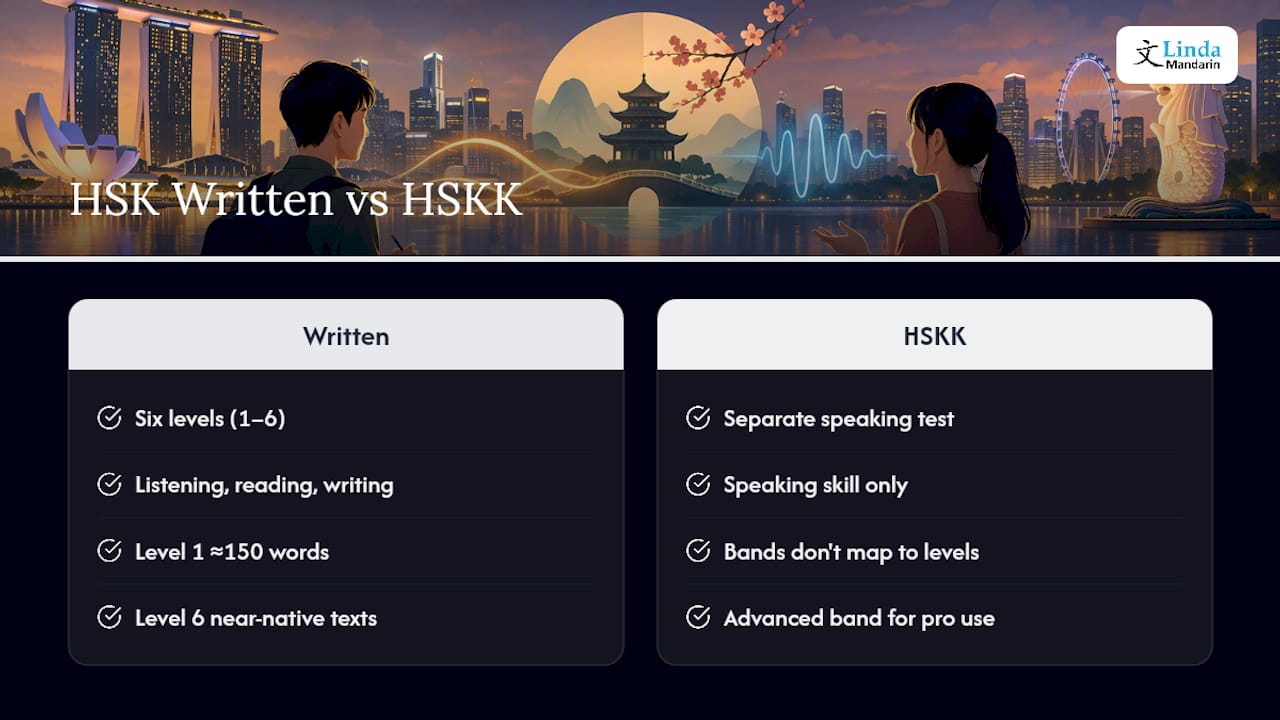
The HSK spans six written levels, each testing progressively more demanding vocabulary, grammar, and reading comprehension. Level 1 covers roughly 150 basic words and simple phrases, useful for greetings and everyday transactions. Level 6, at the other end, requires near-native comprehension of newspapers, lectures, and long-form writing, and it is generally recognized as the benchmark for advanced professional or academic fluency.
Each written level scales in three skill areas, listening, reading, and writing, with the exact weighting shifting slightly as you move up the scale. Lower levels lean heavily on listening and basic reading; upper levels add substantial writing components, including short essays at Level 6. The general overview of HSK’s structure and history is a useful primer if you want the full breakdown of what each level actually tests.
Running alongside the written exam is the HSKK, the speaking component. It is scored and certified separately from the written HSK, split into beginner, intermediate, and advanced bands rather than mapping one-to-one with the six written levels. A candidate aiming for professional-level spoken Mandarin, say for client-facing roles or business meetings, often needs the HSKK advanced band even if their written level sits at HSK 4 or 5. Scheduling the two together on the same test Saturday is common, but you register for each separately, which is worth double-checking when you book.
HSK 3.0 introduced changes to test composition and banding that candidates preparing in 2026 should know about, including revised vocabulary lists and adjusted scoring bands at several levels. The practical effect is that older study materials built around the previous version may not match current test content precisely, particularly for the mid-range levels where vocabulary lists shifted the most. If you studied years ago and are returning to the HSK now, treat your old materials as a starting point rather than a complete guide, and cross-reference against a current HSK format guide before committing to a study plan.
How to Register for a 2026 HSK Test in Singapore, Step by Step
Registration follows a fairly predictable sequence, but skipping a step or misjudging timing is exactly how seats get missed.
- Pick your test date and level first. Match your target Saturday against your own deadlines (job, scholarship, visa, corporate requirement) and confirm which written level and, if needed, which HSKK band you actually need.
- Check the centre’s open registration window. Crestar publishes when registration opens for each 2026 sitting; going in the moment the window opens matters most for popular levels like HSK 3 and HSK 4.
- Create your account and upload documents. You will need a valid photo ID (passport or NRIC/FIN for residents) and a recent passport-style photo meeting the centre’s specifications.
- Pay and save your confirmation. Complete payment through the accepted methods, then save or screenshot your confirmation email immediately.
Acceptable ID documents typically include a passport or a Singapore-issued identity card; an expired document is one of the most common reasons a registration gets bounced back for correction. Photo specifications usually call for a plain background, recent image, and passport-style framing, similar to what you would submit for any government document.
The most frequent registration mistakes are picking the wrong level (registering for HSK 3 when your actual proficiency sits closer to HSK 4, or vice versa) and letting an ID document lapse before test day. Both are avoidable with a five-minute check before you start the online form.
Pro Tip: Screenshot your registration confirmation the moment you get it, and save it in the same folder as your ID scan. On test day, having both on your phone as backup saves you from a stressful scramble if the printed copy gets misplaced.
HSK Test Fees in Singapore by Level, Plus Payment and Refund Notes
Fees scale with level, reflecting the added complexity of scoring higher-level writing and comprehension sections. Exact current pricing for each level is published directly on the Linda Mandarin fees and registration page, which tracks the local fee structure alongside registration rules specific to Singapore candidates.
| Test component | Typical fee structure | Payment notes |
|---|---|---|
| HSK written test (Levels 1–6) | Varies by level, higher levels cost more | Paid at registration, before deadline |
| HSKK speaking test | Separate fee from written test | Registered and paid as a distinct line item |
| Combined written + HSKK | Often bundled if booked together | Confirm bundling discount availability with centre |
Most centres accept major payment cards and some form of local bank transfer, though card processing fees can apply depending on the payment gateway used at checkout. Always complete payment in the same session as registration. Leaving a registration “pending” without payment usually means it does not hold your seat, which defeats the purpose of registering early in the first place.
Refund and cancellation policies tend to be strict, and for good reason: seats are limited and administrative costs are fixed once a candidate is confirmed. Most centres set a firm cut-off, often tied closely to the registration deadline itself, after which fees become non-refundable regardless of the reason for withdrawal. If your schedule is uncertain, it is worth registering for the sitting you are more confident about rather than the earliest available date, since rescheduling between dates is rarely offered as a simple swap.
Preparing for the HSK in Singapore: Classes, Speaking Practice, and Study Tips
How you prepare should match how you actually learn, and adult candidates in Singapore usually fall into one of four camps.
- Self-study works for candidates with strong self-discipline and a lower target level (HSK 1 to 3), especially if Mandarin is already a second or third language for you.
- Group classes suit learners who want structure and peer accountability without the cost of one-on-one tuition, and they work particularly well for HSK 3 and 4 candidates building conversational fluency alongside exam skills.
- Private tuition fits professionals with a tight timeline or a specific weak point, such as writing at HSK 5 or 6, who need focused correction rather than a full curriculum.
- Online Zoom classes solve the scheduling problem for working adults and expats who cannot commit to a fixed weekly slot in person.
For the HSKK speaking component specifically, the most effective drill is recording yourself answering a prompt cold, without notes, then comparing your response against a model answer. Repetition matters more than volume here: five focused minutes a day beats an hour once a week, because spoken fluency depends on retrieval speed under mild pressure, not just vocabulary recall.
Linda Mandarin offers HSK preparation for adult learners across all three formats, group classes, private tuition, and online Zoom sessions, built around a syllabus aligned with international HSK standards. Instruction comes from native Mandarin speakers fluent in English, which matters more than it sounds for adult learners who need grammar explained in a language they already think in. The school’s location right above Tanjong Pagar MRT, at 10 Anson Road, Level 22, International Plaza, makes evening classes genuinely workable for professionals commuting from the central business district.
Pro Tip: If you are prepping for HSKK alongside the written test, practice your speaking drills out loud, not silently in your head. Silent rehearsal builds recognition; speaking out loud builds the retrieval speed the actual test measures.
What to Expect on Test Day and When Results Arrive
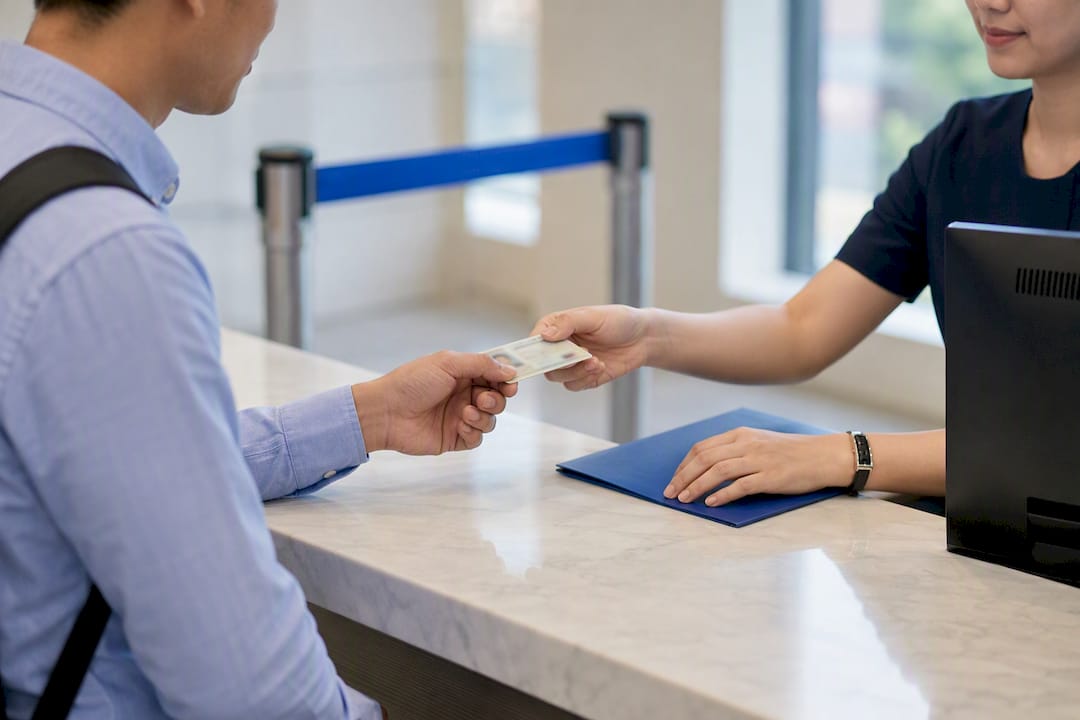
Arrive at least 30 minutes before your scheduled start time. Bring the same photo ID you registered with, since a mismatch between your registration details and your ID on test day is one of the most common reasons candidates get flagged at check-in.
Bringing a phone into the exam room, even switched off, is one of the fastest ways to have your result invalidated, so leave it in a bag rather than a pocket.
Results for 2026 sittings follow the same pattern each time: roughly four to five weeks after the test date, scores post to the official results portal, and physical certificates typically follow by mail some weeks after that. The March 14 sitting posts results April 14; June 27 posts July 28; September 12 posts October 19; and December 12 posts January 15, 2027. Save your registration number, since that is what you will use to check your score online before the physical certificate arrives.
Health and Safety Protocols on HSK Test Days in Singapore
Singapore’s HSK test centres no longer operate under the heightened pandemic-era measures that were standard a few years ago; mask requirements, temperature checks, and safe-distancing seating have been phased out in line with the country’s broader return to normal public event protocols. That said, centres retain the right to implement health measures if public health guidance changes, so it is worth a quick check of the Crestar centre’s current notices closer to your test date, particularly if you are registering months in advance.
Basic good sense still applies. If you are feeling unwell on test day, particularly with symptoms of a contagious illness, contact the centre before your scheduled time rather than showing up and risking a mid-test issue. Policies on illness-related rescheduling vary by centre and by how far in advance you notify them, so this is a case where earlier communication genuinely helps your options.
For candidates arriving from outside Singapore specifically to sit the test, standard travel health advisories that apply to entry into the country take precedence over any test-specific rule, since the exam centre follows national guidance rather than setting its own separate standard. Beyond that, the day itself now runs much like any standard exam: bring your ID, arrive early, and expect a straightforward check-in process without the additional friction that was common a few years back.
What Paul Sees Adult Students Get Wrong
The most common error I see isn’t test anxiety, it’s timeline math. Adult students routinely register for a level based on where they were six months ago, not where they are now, and end up either bored by an easy paper or blindsided by a hard one. The fix is simple: take a placement conversation with an instructor within two weeks of registering, not two weeks before the test.
The second pattern is speaking practice getting sidelined entirely in favor of vocabulary drilling. Written scores climb fast with flashcards; spoken fluency does not. Linda Mandarin’s instructors are native Mandarin speakers fluent in English, which lets us catch pronunciation and tone errors that self-study simply cannot flag. If you take one action this week, book 15 minutes to talk through your actual target level with someone who teaches HSK regularly, not the level you assumed months ago.
— Paul
Get HSK-Ready With Linda Mandarin’s 2026 Prep Courses
Studying alone from a textbook works until you hit a wall on tones, sentence structure, or HSKK speaking fluency that no app can correct in real time. Linda Mandarin has built its HSK exam preparation course around exactly that gap, pairing a syllabus aligned with international HSK standards with native Mandarin instructors fluent in English who can explain grammar the way an adult learner actually needs it explained.
Course formats cover what working adults in Singapore actually need: group classes for structured peer learning, private one-on-one tuition for candidates targeting a specific level fast, and online Zoom classes for anyone juggling a demanding work schedule. Business-focused learners preparing for workplace Mandarin alongside HSK certification can look at the Business Mandarin course track as well. The school sits right above Tanjong Pagar MRT at 10 Anson Road, Level 22, International Plaza, making evening sessions genuinely practical for anyone working in the central business district. If your 2026 test date is already circled on your calendar, reach out to Linda Mandarin now to check current course intake dates and get matched to the right starting level before registration deadlines catch up with you.
Sources
FAQ
When Can I Register for the HSK Test in 2026?
Registration for each 2026 sitting typically opens two to three months ahead of the test date, with deadlines falling roughly six to seven weeks before each Saturday. For the March 14, 2026 sitting, registration closes January 30, 2026; check the full 2026 schedule for the other three dates.
Where Can I Take an HSK Test in Singapore?
The Crestar HSK Education and Assessment Centre, located at 30 Orange Grove Road, #07-00, RELC Building, Singapore 258352, administers the official HSK sittings in Singapore. It handles registration, test-day logistics, and results processing for all four 2026 dates.
Is HSK Level 6 Hard?
HSK Level 6 is the most demanding written level, requiring near-native comprehension of newspapers, lectures, and long-form writing along with essay-level output. It is a realistic target for candidates who have already built strong reading and writing skills at Level 5, but it typically requires sustained, focused study rather than casual review.
How Much Does an HSK Test Cost?
Fees vary by level, with higher written levels costing more due to the added complexity of scoring writing and comprehension sections, and the HSKK speaking test billed separately. Current fee details for each level are published on the Linda Mandarin fees page for Singapore candidates.