HSK measures reading, listening, and writing; HSKK measures speaking only. Take HSK when you need written proof of Mandarin ability for school or work, take HSKK when you need proof you can actually talk, and take both if an employer or program asks for full-skill certification. One caveat: HSK 3.0 folds speaking into the main exam from Band 3 up, so that line will blur for some test-takers.
TL;DR:
- The current HSK 2.0 system tests listening and reading from Level 1 to 4, with writing added at intermediate levels, while HSK 3.0 consolidates speaking into the exam from Band 3 upward.
- HSK and HSKK are graded separately, with HSK focusing on written skills and HSKK on speaking, and their levels do not directly correspond beyond broad mappings.
- Most institutions request a specific HSK level for admissions or jobs, and HSKK certifications are mainly needed for interpreting, teaching, or spoken fluency roles.
- Preparation should emphasize vocabulary, pacing, and pronunciation, with speaking practice starting early to build fluency and confidence under exam conditions.
- When in doubt, choose the exam based on whether written proof or spoken ability is required, and confirm requirements with the requesting organization before registering.
Table of Contents
- What Does the HSK Test Cover?
- What Does the HSKK Test Cover?
- HSK vs HSKK: The Direct Comparison
- Which Exam Should You Take?
- How to Prepare for HSK and HSKK
- Why Speaking Should Come Earlier Than Most Learners Think
- How Linda Mandarin Supports Your HSK and HSKK Preparation
- Sources
- FAQ
What Does the HSK Test Cover?
The HSK is the written and auditory half of Chinese proficiency testing. Under the HSK 2.0 system still running through December 2026, it covers listening and reading at every level, with writing added once you hit the intermediate bands. Lower levels (1 and 2) lean almost entirely on recognition: matching characters to meanings, picking the right answer from audio clips. By levels 3 and 4, you’re writing short sentences and paragraphs from prompts. Levels 5 and 6 expect extended writing, advanced reading comprehension, and a large vocabulary.
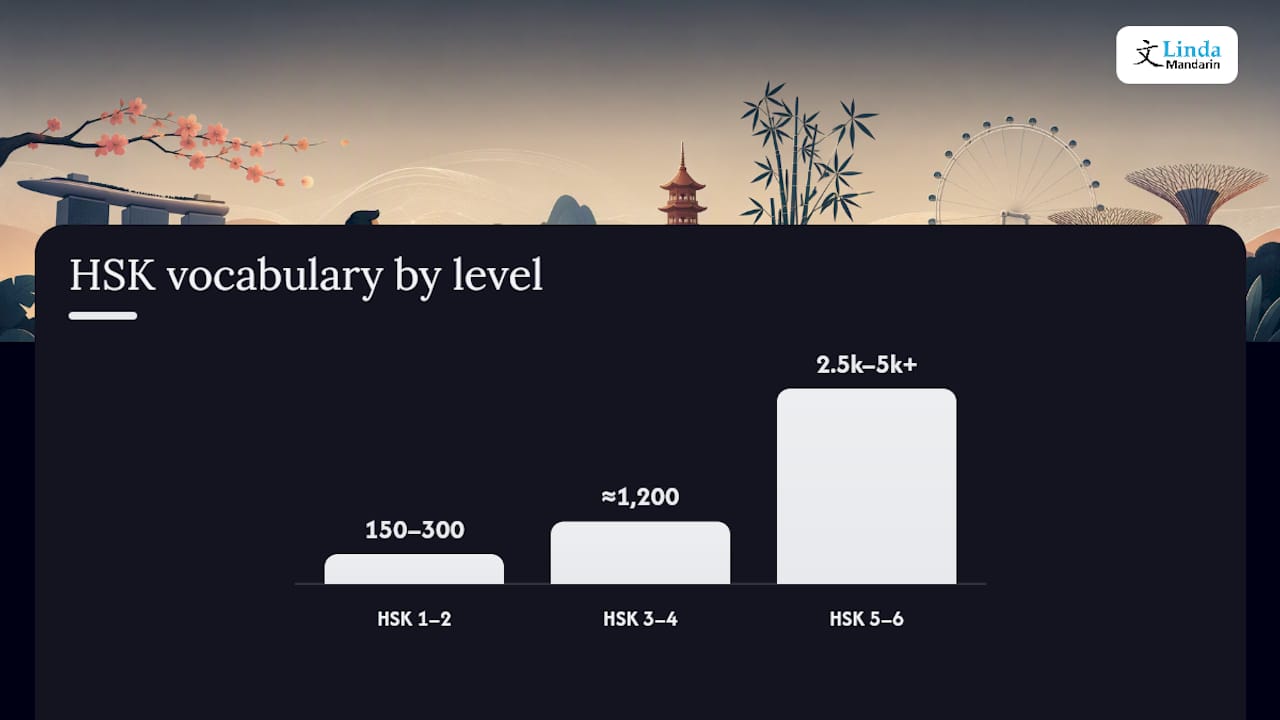
Here’s the skill breakdown by level under the current 2.0 framework:
- HSK 1-2: Listening and reading only, basic vocabulary (150 to 300 words)
- HSK 3-4: Listening, reading, and writing, vocabulary climbing to around 1,200 words
- HSK 5-6: All three skills at an advanced level, vocabulary from 2,500 to 5,000+ words
Confusingly, there’s a second system now in play. HSK 3.0 restructures the traditional six levels into nine bands and folds speaking directly into the exam from Band 3 upward, which means the written-only version of HSK effectively disappears for intermediate and advanced test-takers under the new standard. If you’re registering soon, check which version your target institution actually accepts. Both systems will run in parallel for a while, but the writing is on the wall for HSK 2.0.
Where does the certificate actually get used? Universities lean on it heavily for admissions and scholarship screening, and some employers and visa processes also treat HSK scores as evidence of proficiency. If you’re applying to a Chinese university, a scholarship board, or a job posting that lists a specific HSK level, this is the test they mean. Nobody asks for an HSKK score on a university application form. They ask for HSK 4, or HSK 5, or HSK 6.
What Does the HSKK Test Cover?
HSKK measures one thing: whether you can speak Mandarin under exam conditions. It’s a separate, audio-recorded speaking exam independent of the written HSK, split into three named levels rather than numbered ones.
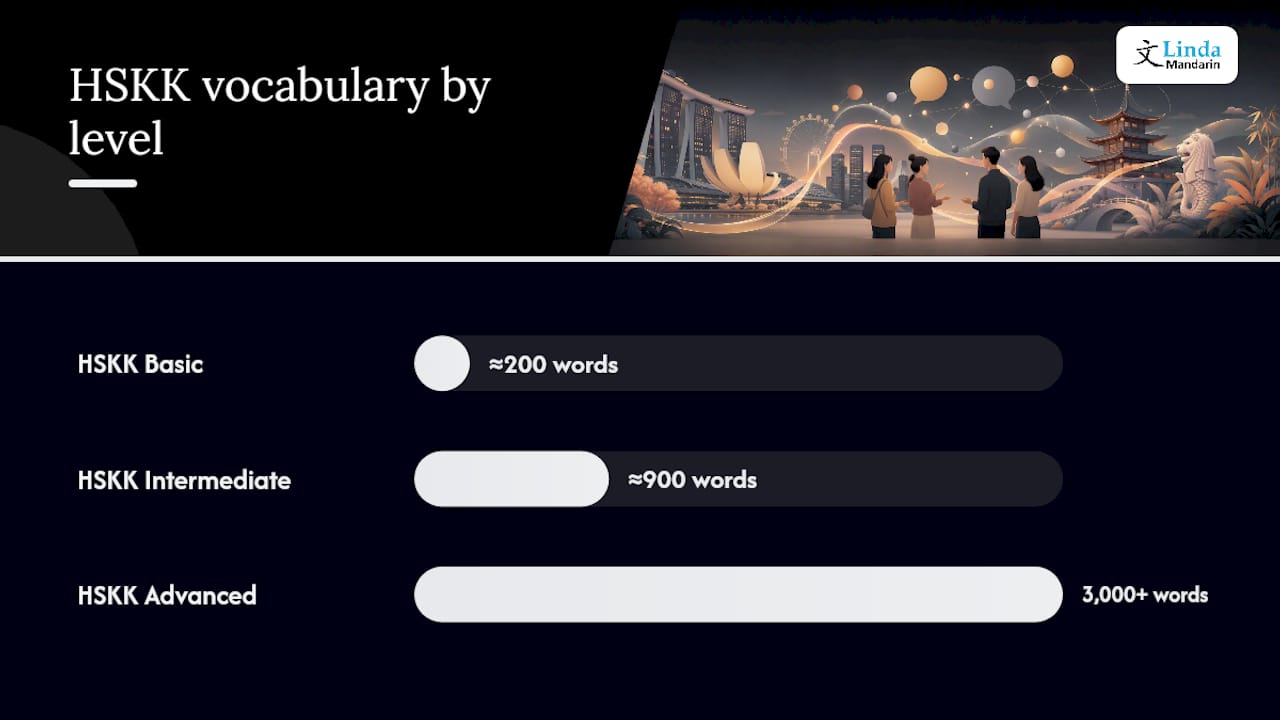
- HSKK Basic: Roughly equivalent to HSK 1-2, built around a vocabulary of around 200 words, mostly reading sentences aloud and answering simple questions
- HSKK Intermediate: Maps loosely to HSK 3-4, expects around 900 words, and adds tasks like listening to a short passage and retelling it
- HSKK Advanced: Aligned with HSK 5-6, draws on a vocabulary of 3,000+ words, and includes defending an opinion or describing a picture at length
The mechanics are consistent across levels: you sit in front of a recorder or computer, prompts play through headphones or speakers, and you respond into a microphone within a set time window. There’s no writing component and no multiple choice. It’s you talking, on the record, being graded on fluency, pronunciation, and how naturally you construct sentences under pressure.
Each HSKK level is scored on a 100-point scale, with a standard pass mark. The certificate reports your numeric score and the level you sat, and unlike the multi-level HSK, there’s no cascading system where a high Basic score substitutes for Intermediate. You register for the level that matches your ability, not the exam entirely, and stopping there.
Who actually requests an HSKK certificate? It shows up most often for interpreter or tour-guide licensing, teaching positions, and roles where an employer specifically needs proof you can hold a spoken conversation rather than just read a memo.
HSK vs HSKK: The Direct Comparison
The two tests split cleanly along one line: paper skills versus spoken skills. Everything else, from level naming to test length, follows from that basic difference.
| Dimension | HSK | HSKK |
|---|---|---|
| Skills tested | Listening, reading, writing (from level 3) | Speaking only |
| Level system | Numbered 1-6 (2.0) or bands 1-9 (3.0) | Named: Basic, Intermediate, Advanced |
| Format | Written test, some listening audio | Fully recorded spoken responses |
| Duration | Up to 140 minutes (level 6) | Varies depending on level, roughly around standard testing durations |
| Scoring | 200 or 300 point scale depending on level, pass around 60% | Scored out of 100, pass mark 60 |
| Typical use | University admissions, scholarships, employer/visa proof | Interpreter licensing, teaching roles, spoken-fluency proof |
Common practice maps HSK 1-2 to HSKK Basic, HSK 3-4 to HSKK Intermediate, and HSK 5-6 to HSKK Advanced, though nothing forces you to sit them in matching pairs. You can hold an HSK 5 certificate and never touch HSKK, or pass HSKK Advanced while your written Mandarin lags behind. They’re graded and issued independently.
Pro Tip: If a program or employer only lists a numbered HSK requirement, don’t assume HSKK is implied. Email and ask. Plenty of roles that sound speaking-heavy, like client-facing sales positions, only ask for the written HSK score on paper.
The durations and pass thresholds above come from standard testing-center summaries, and they hold steady across most test locations worldwide. The real shift to watch is structural: HSK 3.0’s integration of speaking from Band 3 upward means that starting at the intermediate level, the clean split between “HSK tests writing” and “HSKK tests speaking” stops applying. If your target institution has already moved to the 3.0 standard, budget speaking prep into your HSK study time, not just your HSKK study time.
Which Exam Should You Take?
Match the exam to what’s actually being asked of you, not to what feels like the more complete credential. Here’s how that plays out across the situations learners run into most.
- Applying to a Chinese university or scholarship program. Take the HSK. Nearly every admissions office and scholarship board asks for a specific numbered HSK level, and most accept scores from within the past two years even though the certificate itself doesn’t technically expire.
- A job posting lists an HSK requirement. Sit the HSK at that level. Don’t assume you need HSKK too unless the listing specifically says “spoken fluency required” or names HSKK directly.
- You’re pursuing interpreter work, tour guiding, or a teaching role. HSKK matters more here than the written score. Employers in these fields are testing whether you can hold a real-time conversation, not whether you can write an essay.
- You want a personal benchmark for conversational progress. HSKK gives you a cleaner read on actual speaking ability than HSK does, since HSK’s listening and reading sections can mask weak spoken skills.
- You need broad, defensible proof of Mandarin ability for a résumé or LinkedIn profile. Sit both. A written HSK level plus an HSKK level covers every angle an employer might ask about.
- You’re planning to test after institutions fully adopt HSK 3.0. Check your target school or employer’s accepted standard before registering. HSK 2.0 sittings remain valid through December 2026, but a program that has already switched to 3.0 will expect the banded system, speaking component included.
If none of those scenarios match your situation exactly, default to this: written proof needed, sit HSK; spoken proof needed, sit HSKK; unsure which the other party wants, ask them directly before you register and pay the fee twice.
How to Prepare for HSK and HSKK
Preparation for these two exams overlaps less than most learners expect. HSK rewards vocabulary breadth and reading speed. HSKK rewards fluency under time pressure, and no amount of flashcard drilling fixes a stiff, hesitant speaking pattern.
- Set a vocabulary target tied to your level, not a vague “get better” goal. HSK 4 needs roughly 1,200 words; HSKK Intermediate assumes around 900. Guides commonly cite 600 to 800 study hours to move from zero to HSK 4, which is a useful gut check if your timeline feels unrealistic.
- Run full-length mock tests under real time limits. HSK’s later levels run up to 140 minutes, and pacing yourself across that stretch is a skill separate from knowing the material.
- Record your own speaking practice and play it back. This does more for HSKK readiness than unstructured conversation practice, because it forces you to hear your own hesitations and mispronunciations the way an examiner will.
- Shadow native audio daily for rhythm and tone accuracy. Repeating short clips out loud, matching pitch and pacing, builds the muscle memory that HSKK’s read-aloud and retelling tasks demand.
- Get feedback from a tutor who has graded or sat HSKK before. Self-assessment misses pronunciation errors that are obvious to a trained ear but invisible to you.
Test-day logistics differ meaningfully between the two exams. HSK registration typically requires a passport or national ID, and you’ll take the exam on paper or computer depending on the test center. HSKK requires the same ID check but adds a hardware step: most centers use a computer with a headset and microphone, though some smaller centers still use handheld recorders. If your center offers a live examiner option instead of a recorded booth, ask in advance. Some test-takers perform better speaking to a person than to a machine, and knowing which format you’ll face changes how you should rehearse.
Pro Tip: Retake rules vary by test center, but most allow you to resit either exam as soon as the next scheduled sitting comes around. There’s no mandatory waiting period tied to a failed attempt, so a weak HSKK score doesn’t lock you out of trying again within the same testing cycle.
If you want structured guidance instead of piecing together a study plan on your own, a clear, staged prep path tends to shorten the distance between “I understand the material” and “I can perform it under exam conditions.”
Why Speaking Should Come Earlier Than Most Learners Think
Classroom experience keeps surfacing the same pattern: learners who treat HSKK as an afterthought, something to tack on after they’ve locked in a written HSK level, end up spending far longer on speaking prep than they expected. Reading and listening skills transfer into speaking only partially. You can recognize five thousand characters and still freeze when asked to describe your weekend out loud.
The learners who move fastest overall are the ones who start recorded speaking practice from week one, not after they’ve “finished” their written prep. It reframes speaking as a skill built in parallel rather than a bonus tacked onto the end, and it matters more now than it used to. With HSK 3.0 folding speaking into the main exam from Band 3 upward, that old sequencing habit, grammar and vocabulary first, speaking later, is becoming a liability rather than a preference.
There’s also a quieter benefit to sitting HSKK even when nobody’s asked for it: the recorded, timed format exposes weaknesses that casual conversation practice never will. A tutor chat lets you pause, rephrase, gesture your way past a gap. A microphone and a countdown timer don’t.
Some adult Mandarin programs build speaking practice into HSK preparation from the start rather than treating it as a separate track, which aligns with current exam demands.
— Paul
How Linda Mandarin Supports Your HSK and HSKK Preparation
Here’s the practical edge of studying with structured guidance instead of self-study alone: you get exam-specific feedback on the exact skill gaps that cost points, rather than generic conversation practice that may or may not touch what the test actually measures.

Linda Mandarin’s HSK Test Preparation Course covers the reading, listening, and writing demands across levels, with instructors who build speaking drills into every session rather than leaving them for a separate HSKK track. For learners based locally, the HSK Singapore preparation course adds test-center scheduling guidance specific to the region. Both are available as physical group classes at our training center at 10 Anson Road, Level 22, International Plaza, Singapore 079903, right above Tanjong Pagar MRT, or as live online Zoom sessions for learners who need flexibility.
If you’re not sure which level or exam matches your current ability, a placement conversation can help you land in a class that matches your starting point rather than guessing. Reach out through the course details page to check current schedules and get matched to the right starting level.
Sources
For readers who want to verify exact formatting, timing, and score rules straight from the source:
- HSK/HSKK proficiency tests (all ages) | 汉语水平考试 / 汉语水平口语考试 | Confucius Institute | The University of Sheffield
- HSK vs HSKK: Which Chinese Test Is Right for You? (Full Comparison + Advice) – ImproveMandarin
FAQ
Is HSK Recognized in Singapore?
Yes, HSK is widely recognized across educational institutions, employers, and government-linked programs in Singapore as a standard measure of Mandarin proficiency.
Is HSK 5 Considered Fluent?
HSK 5 demonstrates strong intermediate to advanced ability, roughly enough to discuss familiar topics and read newspapers, but it falls short of the native-level command implied by “fluent.”
Can I Skip HSK 1 and 2?
Yes, you can register directly for any HSK level regardless of whether you’ve passed lower levels, though jumping straight to HSK 3 or 4 without that foundation often means struggling with vocabulary and grammar you haven’t built yet.
Is HSK 5 Enough to Live in China?
HSK 5 covers enough vocabulary and reading ability to handle most daily situations and workplace communication, though some visa and employment applications specifically require HSK 6 depending on the role.
What Is HSKK?
HSKK is the standalone speaking exam in the Mandarin proficiency testing system, scored out of 100 with a pass mark of 60, and it’s taken independently of the written HSK.