TL;DR:
- Mandarin fluency is now essential for Singapore professionals working with Chinese-speaking clients and partners.
- Building tonal accuracy and pronunciation from the start is critical to avoid long-term communication issues.
- Real-world practice and cultural immersion accelerate mastery and help maintain fluency over time.
Mandarin fluency is no longer a nice-to-have skill for professionals in Singapore. It is fast becoming a competitive necessity, especially for anyone working with Chinese-speaking clients, regional partners, or multinational teams. Yet many learners hit the same wall early on: tones sound impossible to distinguish, Hokkien or Cantonese habits bleed into pronunciation, and progress stalls after the first few weeks. This article gives you a structured, research-backed roadmap to move past those barriers, from building your first vocabulary bank to maintaining long-term fluency after your formal course ends.
Table of Contents
- Preparing for Mandarin learning: What you need to succeed
- Building a strong foundation: Tones, pronunciation, and basic structures
- Advancing your skills: Multi-modal learning and active usage
- Staying fluent: Maintenance strategies after your course
- A fresh perspective: Why mastery requires a local, integrated approach
- Where to learn Mandarin in Singapore: Tailored solutions for adults and professionals
- Frequently asked questions
Key Takeaways
| Point | Details |
|---|---|
| Tones matter most | Accurate tone mastery is the single biggest factor for Singaporean Mandarin learners. |
| Preparation is crucial | Careful setup, realistic goals, and suitable tools lay the groundwork for efficient Mandarin learning. |
| Continuous practice | Weekly speaking and spaced repetition prevent language loss and build lasting fluency. |
| Multi-modal learning boosts progress | Combining listening, speaking, reading, and writing accelerates proficiency for advanced learners. |
Preparing for Mandarin learning: What you need to succeed
With a clear understanding of why mastering Mandarin is crucial, let’s look at how to prepare for effective learning.
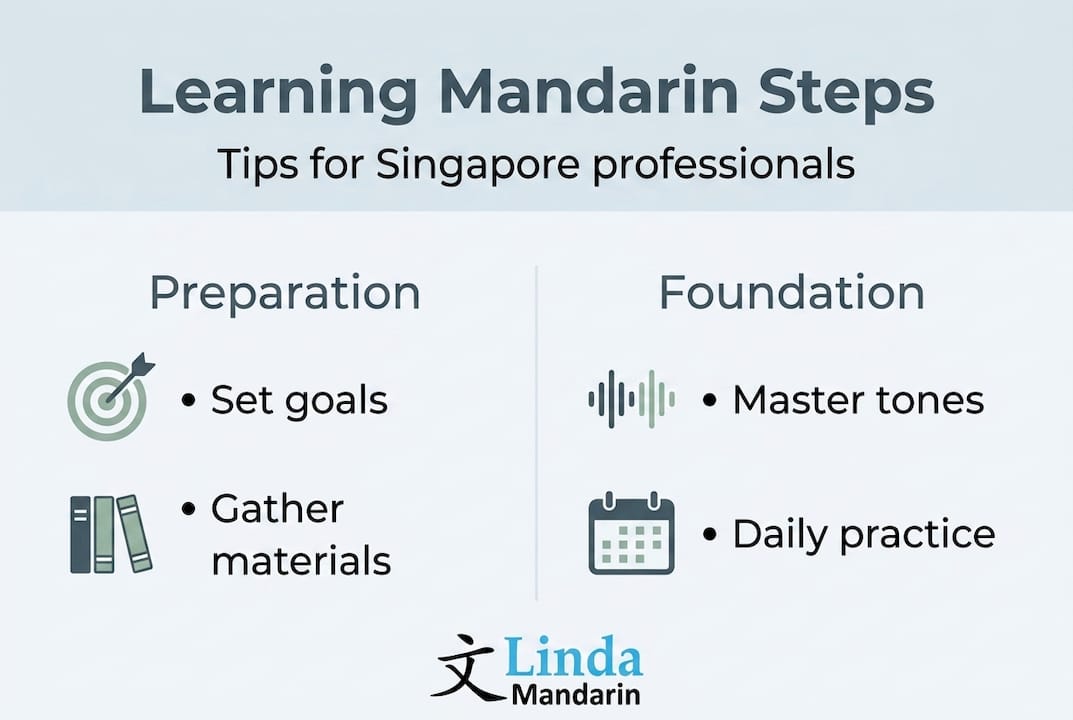
Good preparation is what separates learners who plateau from those who progress steadily. Before you sit down with your first textbook or open a language app, it pays to organize your environment, gather the right tools, and set expectations that match reality.
Essential tools and resources
The market offers no shortage of learning materials, but quality matters more than quantity. Here is what actually moves the needle:
- Textbooks aligned with HSK standards: The HSK (Hanyu Shuiping Kaoshi) is the internationally recognized Mandarin proficiency test. Textbooks built around this framework give your vocabulary and grammar a structured progression rather than random word lists.
- Audio resources with native pronunciation: Podcasts like ChinesePod or audio tracks from established courses train your ear before your mouth. Passive listening, even during commutes, accelerates recognition.
- Flashcard apps with spaced repetition: Anki and Pleco are staples for Mandarin learners. They surface vocabulary at precisely the right interval to lock it into long-term memory.
- A dedicated recording device: Record yourself speaking, then compare with native audio. Most learners are surprised by how much their tones drift until they hear the evidence themselves.
Setting up your learning environment
Consistency beats intensity almost every time in language learning. Choose a fixed time slot each day, even if it is only 20 minutes, and protect it as you would a work meeting. A quiet space with minimal interruptions matters more than a sophisticated setup. Sitting at the same desk, at the same time, triggers a mental routine that reduces the friction of starting each session.
| Factor | Recommended approach | Why it matters |
|---|---|---|
| Daily study time | 20 to 45 minutes | Prevents burnout while building habit |
| Practice schedule | Same time each day | Strengthens routine and recall |
| Core tools | Textbook, app, audio | Covers grammar, vocab, and listening |
| Self-monitoring | Weekly speaking recordings | Tracks real improvement over time |
Confronting dialect interference and tone confusion
For many Singaporeans, the biggest hidden obstacle is dialect interference. If Hokkien or Cantonese is spoken at home, your brain already has deeply ingrained tonal patterns that do not map cleanly onto Mandarin. Tonal accuracy is critical, especially for Western or English-dominant learners in Singapore, and the same principle applies to anyone whose primary language uses a different tonal system.
Shadowing is one of the most effective corrective tools available. In shadowing, you listen to a native speaker and speak aloud simultaneously, matching their rhythm, pitch, and pacing as closely as possible. It feels awkward at first, but it retrains your mouth and ear together rather than separately. Exploring unique Mandarin learning methods and best learning approaches can help you identify which combination works for your specific background.
Pro Tip: Set a 90-day goal with milestones, not a vague “I want to be fluent” target. Something like “hold a 3-minute business conversation by week twelve” gives your brain a concrete endpoint to work toward. Use a habit-tracking app to log daily practice and celebrate small wins.
Building a strong foundation: Tones, pronunciation, and basic structures
Once you’re prepared, the next step is to lay a strong foundation, starting with tones and pronunciation.
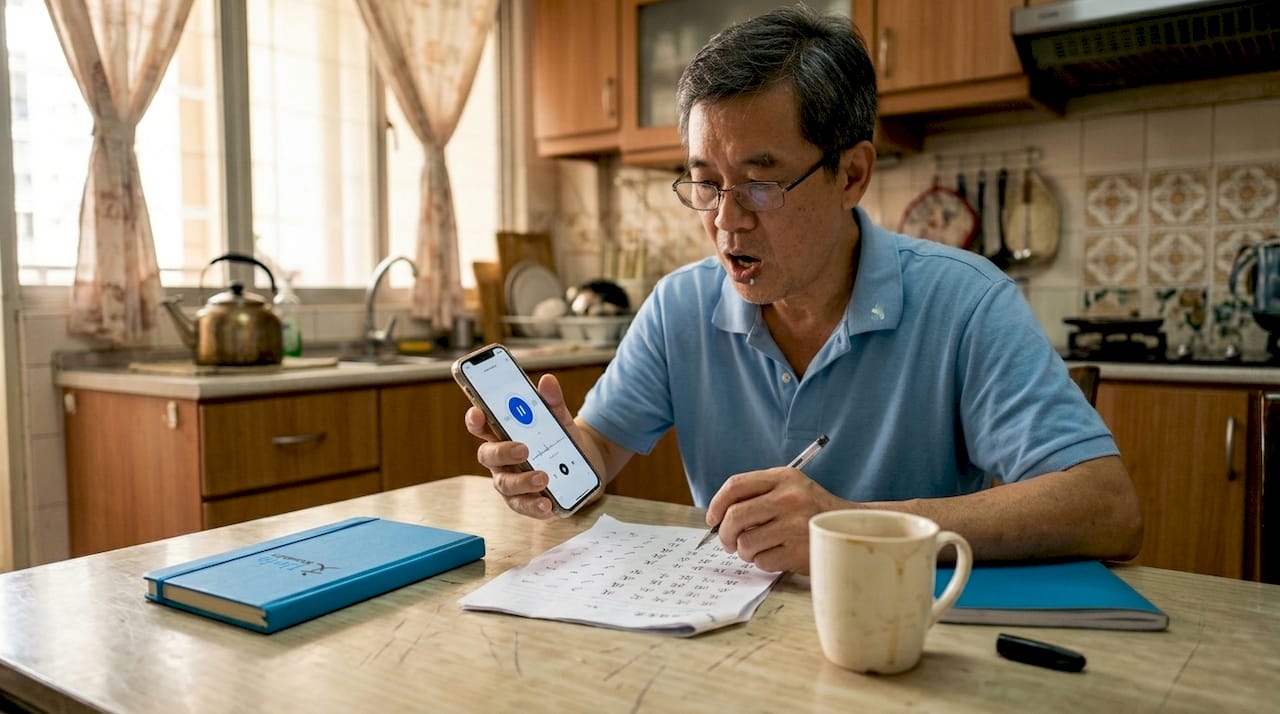
Mandarin is a tonal language with four distinct tones plus a neutral tone. The same syllable pronounced with a different tone carries a completely different meaning. For example, “mā” (mother), “má” (hemp), “mǎ” (horse), and “mà” (scold) are four entirely separate words. This is not a quirk you can paper over with context. Getting tones wrong in a business meeting can be not just confusing but genuinely embarrassing.
Why tones are non-negotiable
Many English-speaking learners treat tone as an afterthought, focusing first on vocabulary and grammar. This is a costly mistake. Once your brain registers a word with the wrong tone, that incorrect version becomes the default, and relearning it later requires significant effort. The better strategy is to learn every new word with its tone from day one, every single time, without exception.
A particularly effective approach is tone pair drilling. You practice two words that share the same consonant and vowel but differ only in tone, repeating them until your ear and mouth can instantly tell them apart. Drilling tone pairs and shadowing are especially helpful for Western learners, and the same conclusion holds for English-dominant speakers in Singapore.
A step-by-step approach to tone and pronunciation drills
- Start with Pinyin (romanized spelling system): Learn to read Pinyin accurately before attempting characters. It maps pronunciation onto a system your eye already knows.
- Isolate each tone with minimal pairs: Practice first tone vs. second tone using just five to ten word pairs per session.
- Listen to native audio three times before repeating: This saturates your auditory memory with the correct pattern.
- Record your attempt and compare: Most learners are overconfident about their tones until they hear themselves objectively.
- Progress to sentence-level tone practice: Once individual tones feel stable, move to two-word and then three-word phrases to practice tone sandhi (where tones shift in connected speech).
Comparing tonal drill methods
| Method | Best for | Time investment | Effectiveness rating |
|---|---|---|---|
| Minimal pair drills | Tone discrimination | 10 min/day | High |
| Shadowing native audio | Natural rhythm and flow | 15 min/day | Very high |
| Flashcard apps with audio | Vocabulary tone memory | 20 min/day | High |
| Language exchange speaking | Real-time correction | 30 min/session | Moderate to high |
For Singapore-based learners, exploring tone mastery techniques and a step-by-step Mandarin guide will help you choose the right mix based on your current level and schedule.
Pro Tip: Shadow native speakers in real-world contexts, not just textbook recordings. News broadcasts, YouTube cooking channels, and business podcast episodes in Mandarin expose you to natural speech patterns that textbooks rarely capture. Even ten minutes of daily shadowing accelerates tone accuracy significantly.
Advancing your skills: Multi-modal learning and active usage
After mastering the core basics, it’s time to push your skills further with advanced, practical techniques.
Once your tones are reasonably reliable and you can hold simple conversations, the learning strategy needs to shift. At the intermediate level, the brain benefits most from using all four language skills together, listening, speaking, reading, and writing, rather than drilling a single skill in isolation.
What multi-modal learning actually looks like
Advanced learners benefit from multi-modal settings using explicit encoding and fast mapping, two cognitive processes that work together to build lasting vocabulary and grammar networks. Explicit encoding means deliberately analyzing a new word or structure, understanding how it is built, what it means in context, and how it connects to what you already know. Fast mapping means quickly assigning a new word to a concept based on context, the same way children pick up words naturally.
In practice, a multi-modal session might look like this:
- Listen to a 5-minute business podcast episode in Mandarin without a transcript
- Read the transcript afterward, noting unfamiliar characters and vocabulary
- Speak by summarizing what you heard in your own Mandarin words
- Write three sentences using the new vocabulary from memory
This kind of integrated practice forces the brain to process the same language content through multiple channels, which dramatically improves retention.
Applying Mandarin in real Singapore contexts
Singapore is genuinely unique for Mandarin learners because the language is actively used across business, food culture, retail, and community events. You do not need to manufacture artificial practice opportunities. Ordering at a hawker center in Mandarin, following up with a Chinese-speaking vendor in writing, or attending a Chamber of Commerce networking event where Mandarin is spoken all count as valuable practice.
Following proven Mandarin learning steps and studying pronunciation tips alongside real-world practice builds the kind of fluency that holds up under pressure, not just in a classroom but in an actual board meeting.
Key insight: Learners who use Mandarin in at least two real-life contexts per week outside of formal study show measurably faster progress than those who restrict practice to classroom settings alone.
Pro Tip: Participate in local Mandarin-speaking events or groups. Community centers across Singapore run Mandarin conversation clubs, and professional associations often host bilingual networking sessions. These settings expose you to the specific vocabulary and communication styles you will actually encounter in your career.
Staying fluent: Maintenance strategies after your course
Having built advanced skills, it’s vital to proactively maintain and enhance your Mandarin fluency for lasting progress.
Completing a formal Mandarin course is a major achievement, but it is not the finish line. Language attrition, the gradual loss of a language skill due to infrequent use, is real and measurable. Without deliberate maintenance, even a strong intermediate speaker can lose significant ground within six months of stopping formal study.
How spaced repetition systems prevent forgetting
A spaced repetition system (SRS) is a study method where flashcard review intervals grow longer each time you answer correctly. Get a card right, and it comes back in a few days. Get it right again, and it comes back in two weeks. This matches how human memory actually works, reinforcing vocabulary just before you would naturally forget it. Regular weekly speaking and spaced repetition help counter language attrition effectively. Apps like Anki make it easy to build and maintain decks of business vocabulary, HSK characters, or phrases specific to your industry.
A maintenance toolkit for busy professionals
- Weekly 30-minute conversation session: Schedule a standing call with a language exchange partner or tutor. Treating it like a calendar appointment makes cancellation less likely.
- Daily SRS review: Even five minutes of flashcard review before your morning coffee keeps vocabulary active with minimal time cost.
- Mandarin media consumption: Swap one English podcast or Netflix show per week for a Mandarin-language equivalent. Business news programs work particularly well for professionals.
- Monthly writing practice: Write one short paragraph or business email in Mandarin, then have a native speaker check it. Writing reinforces character memory in ways that speaking alone cannot.
- Attend community or professional Mandarin events: Singapore’s calendar is filled with cultural and business events where Mandarin is the primary language. These provide natural immersion opportunities without the need to travel.
Strategies for maintaining Mandarin fluency are well worth exploring in depth, and reasons to keep fluent extend well beyond the classroom to career longevity and cultural belonging.
“Fluency is not a destination you arrive at and then park. It is a living skill that grows or shrinks depending on how consistently you use it.”
Pro Tip: Join a Mandarin-speaking meetup or virtual group specifically for professionals. Platforms like Meetup.com and Facebook Groups host Singapore-based Mandarin conversation circles, some of which are industry-focused. Speaking with peers who share your professional vocabulary needs accelerates both fluency and confidence simultaneously.
A fresh perspective: Why mastery requires a local, integrated approach
Most articles about learning Mandarin give you a generic study plan that could apply to a student in London or a retiree in Melbourne. But Singapore is a genuinely different environment, and treating it as just another place to study Mandarin is a missed opportunity.
The most common pitfall we see among Singapore professionals is treating tonal accuracy and maintenance as optional extras rather than non-negotiable foundations. Learners invest months in vocabulary and grammar, then undermine all of it by delivering words in the wrong tone or letting the skill decay after finishing a course. This is not a motivation problem. It is a strategy problem.
What actually separates professionals who achieve lasting Mandarin fluency from those who stall is cultural integration. Mandarin in a Singapore business context carries specific social cues, levels of formality, and industry-specific expressions that no textbook fully captures. The learners who progress fastest are those who immerse themselves in local usage, whether through hawker center conversations, Chinese-language business news, or industry networking events where Mandarin is spoken.
Reading about Mandarin class realities in Singapore reveals something many learners discover too late: the best classroom instruction works only when it is paired with consistent, deliberate real-world application outside class hours. The classroom gives you structure. The real world gives you fluency.
Where to learn Mandarin in Singapore: Tailored solutions for adults and professionals
To support your Mandarin learning journey, here are expert-led resources and courses tailored for Singapore’s professional community.
At Linda Mandarin, we have been helping adults and professionals build real Mandarin skills since 2003. Whether you need foundational conversational ability or advanced business communication, our courses are structured around practical outcomes, not academic theory.
Our corporate Mandarin training programs are designed for teams and individuals who need Mandarin that works in boardrooms and client meetings, not just textbooks. For professionals focused on negotiations and business relationships, our business Mandarin courses cover the specific vocabulary and communication styles that matter most. Not sure where to start? Explore our Mandarin lesson levels to find the right starting point based on your current skills and goals. Group, private, and online Zoom options are all available.
Frequently asked questions
How important are Mandarin tones for Singaporean learners?
Mandarin tones are critical for English-dominant learners in Singapore because tonal accuracy directly impacts meaning, and even subtle tonal errors can cause genuine miscommunication in professional settings.
What is the best way to maintain Mandarin fluency after completing a course?
The most effective approach combines weekly speaking and spaced repetition to actively fight language attrition, keeping both vocabulary and conversational ability sharp over time.
Are there specific challenges Singaporeans face when learning Mandarin?
Singaporeans often need to overcome dialect interference and tonal accuracy issues rooted in the influence of Hokkien, Cantonese, or English on their pronunciation patterns.
How can advanced learners accelerate their Mandarin proficiency?
Advanced learners benefit most from multi-modal learning with explicit encoding and fast mapping techniques, combining listening, speaking, reading, and writing in every study session.