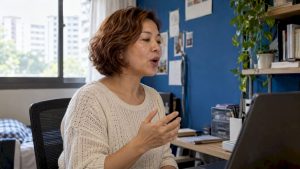
A native Chinese teacher is someone who grew up speaking Mandarin and can model natural pronunciation, tone and phrasing for you. The best one for an adult learner also teaches well. They assess your level, explain why you made a mistake, correct you in the moment and build lessons around your goals. This guide shows what to look for in Singapore, where Mandarin has its own local flavor, so you can choose a teacher for your conversation or business needs.
TL;DR
- “Native” tells you about a teacher’s Mandarin. It does not tell you how well they teach, so look for both.
- Ask where a teacher’s Mandarin comes from. Singapore, mainland China and Taiwan share a standard but differ in vocabulary, accent and everyday habits.
- Check for formal teaching training and real experience with adult learners, not just a fluent speaker.
- A good lesson assesses your level, corrects you, explains the reasons and ties practice to your goals, such as meetings, clients or daily conversation.
- Group, private and online Zoom formats all work with a native teacher. Pick the one that fits your schedule and speaking time.
Table of Contents
- What “native Chinese teacher” means in Singapore
- What a native speaker gives you
- Which Mandarin does your teacher speak?
- Qualifications and experience to look for
- Teaching approaches that work for adults
- How to tell whether a teacher fits you
- Group, private or online with a native teacher
- Learn with a native teacher at Linda Mandarin
- How to prepare for your first native-teacher lesson
- FAQ
- Sources
What “native Chinese teacher” means in Singapore
In practice the phrase covers three things, and it helps to separate them.
First, it means a first-language speaker of Mandarin. That usually means a teacher born and educated in a Mandarin-speaking environment, who uses the language by instinct and not by rule.
Second, it often signals a Putonghua (standard Mandarin) speaker. Standard Mandarin is what you will hear in news broadcasts, hear in business meetings and see in textbooks. The standard is shared across Mainland China, Taiwan and Singapore, with small differences in vocabulary.
Third, in Singapore, it can raise a local question. Many Singaporeans grew up speaking Mandarin at home or school, and many speak it fluently. Others use a more casual, mixed style in daily life. We cover that below, and our own piece on what kind of Chinese Singaporeans speak goes deeper.
So when you search for a native Chinese teacher, you are really asking three things:
- Will I hear natural, clear Mandarin that I can imitate?
- Will the teacher speak the variety I need for my work or travel?
- Can this person actually teach an adult, in English where needed, and in a way that gets results?
The rest of this guide helps you answer all three.
What a native speaker gives you
A native teacher gives you a living model. Mandarin is a tonal language, so small differences in pitch change meaning. Hearing a fluent speaker produce tones in connected speech, not just single words, helps your ear tune in faster. A native teacher can also tell you quickly when a sentence is grammatically right but sounds unnatural, which is the most common problem for intermediate learners.
Other practical gains:
- Natural rhythm and phrasing. You learn how people really say “I’ll get back to you on that” or “let’s grab lunch”, not only textbook patterns.
- Cultural context. A native teacher explains why a polite refusal sounds the way it does, or how to address a senior client. This matters in business settings. Read more on why learning Mandarin with native teachers pays off.
- Confidence in speaking. Regular conversation with a fluent speaker builds the habit of responding in real time.
Native fluency and teaching skill are different things
Being a native speaker does not automatically make someone a good teacher. Applied linguist Jack Richards observed that some of the best language classes he saw were taught by non-native speakers and some of the worst by native speakers. His point is that teaching is a skill in its own right: planning, explaining, giving feedback and managing a class.
For you, the practical conclusion is simple. Look for a teacher who has both native-level Mandarin and a trained teaching method. Fluency without method can leave you with a pleasant chat but no clear progress. Method without natural Mandarin can leave you with correct sentences that sound stiff. The combination is what you are paying for.
Which Mandarin does your teacher speak?
This is the part most guides skip, and it matters in Singapore.
Standard Mandarin and Singapore Mandarin
Research on Singapore Mandarin describes it as a regional variety shaped by Southern Chinese dialects and long contact with English and Malay. One academic paper quotes the view that it is a regional variety of Putonghua nurtured in Singapore’s soil. The same paper proposes two layers: a Standard Singapore Mandarin that is basically the same as Putonghua, and a folk, everyday form that is more heavily mixed with local languages.
For a learner, this means two things. The standard you study in class is widely understood across the Chinese-speaking world. And the Mandarin you hear at a hawker centre or in a casual office chat may use words and structures that differ from your textbook. A good teacher tells you which is which. Our article on three grammar shifts between Singapore and mainland Mandarin gives concrete examples.
Why it matters for work
If your clients or colleagues are in mainland China, the difference becomes practical. A Singapore news report on the Speak Mandarin Campaign notes that professionals dealing with partners across China meet different accents, terms for the same thing and speaking speeds. The article gives a familiar example: the way Singaporeans say “what” differs from the way Beijing speakers do.
So ask yourself where you will use your Mandarin:
| Your main use | What to ask a teacher about |
|---|---|
| Daily life and friends in Singapore | Common local expressions, and how they differ from the textbook form |
| Business with partners in mainland China | Standard pronunciation, business vocabulary and regional accents you may hear |
| Travel and culture | Practical conversation, polite forms and everyday phrases |
| Reading and writing for work | Character recognition, formal email and report writing |
A teacher who explains variation
Research on teaching Mandarin to foreign learners backs this up. A paper in the International Journal of Chinese Language Education recommends exposing students to non-standard Mandarin accents and advises teachers to acknowledge discrepancies and explain both standard and non-standard forms when needed. In other words, the strongest native teacher does not pretend there is only one way to speak. They teach a clear standard and prepare you for the variety you will meet in real life.
If you want a fuller overview, see our guide to Mandarin dialects in Singapore and the best choices for learners.
Qualifications and experience to look for
There is no single licence that every good teacher holds, but several signals help.
Formal training in teaching Chinese as a foreign language. There is an international certification route for this. The International Chinese Teacher Certificate has, from 2025, three levels: Elementary, Intermediate and Advanced. For native Chinese speakers, the page states that the Putonghua proficiency level must be 2-A or above. You do not need to quiz a teacher about this exam, but it shows that serious teaching of Chinese as a second language is a recognized profession with its own standards.
Experience with adult learners. Teaching adults differs from teaching school pupils. Adults want clear reasons, fast practical gains and lessons that respect a busy schedule. Ask how long the teacher has worked with working professionals or expatriates.
Fluency in English. For beginners especially, a teacher who can explain grammar in English saves hours of confusion. This is not about avoiding Mandarin. It is about using English briefly and precisely when it helps, then returning to Mandarin.
Specific experience for your goal. Business Mandarin needs vocabulary for meetings, negotiations and email. Conversational Mandarin needs listening practice and natural phrasing. A teacher strong in one is not always strong in the other.
A structured syllabus. A teacher should be working from a clear level-by-level plan, not improvising each week. You should be able to say what you will be able to do at the end of a course.

For a wider checklist, see how to choose and succeed in a Chinese course in Singapore.
Teaching approaches that work for adults
Adults learn practical Mandarin best when lessons mirror the situations they will face. These are the approaches that matter most.
Speak from the first lesson
A communication-focused class has you producing sentences early, in short exchanges about your own life, work and plans. You build confidence by using what you learned within minutes, not weeks.
Learn in situations, not lists
Instead of memorizing isolated words, you practice a scenario: introducing yourself to a client, ordering for a group, rescheduling a meeting. Each scenario carries its own vocabulary, grammar and polite forms, so you remember them together.
Correct errors with an explanation
A native teacher hears your errors instantly. The skill is in correcting them well: repeating the right form, saying why, then having you try again. Constant interruption kills fluency, and no correction at all fixes nothing. Look for a balance.
Build tones into everything
Tones are practiced inside phrases and sentences, not as a separate drill. This is where native modeling helps most.
Add reading and writing at your pace
Many working adults only need spoken Mandarin. Others need to read emails or write short messages. A good course lets you decide how much character work to include.
Practice between lessons
Short daily practice beats one long weekly session. A teacher should give you small, specific tasks, such as recording a 30-second self-introduction, and review them.
Our resources for learning Mandarin page suggests ways to keep that between-class practice going.
How to tell whether a teacher fits you
You can judge a teacher by what happens in the lesson. One guide to choosing a language tutor describes the signs of a competent session: the tutor assesses your current level through conversation, shows their approach by actually teaching, corrects your errors and asks about your goals.
Use these questions as a checklist for any teacher or class:
- Do they ask what you need Mandarin for? A teacher who never asks about your job, timeline or interests cannot tailor the lessons.
- Do they check your level? Placement through a short conversation avoids classes that are too easy or too hard.
- Do they explain, not just repeat? You should leave knowing why a sentence works.
- Is the talking time balanced? In a good class, you speak more than the teacher.
- Do they give a plan? You should hear what the next few lessons will cover and what you will be able to do afterwards.
- Does the style suit you? Some learners like structure and drills, others prefer free conversation. Neither is wrong.
If you are still comparing formats, our guides to Chinese courses for adults in Singapore and Chinese lessons in Singapore lay out what each format offers.
Group, private or online with a native teacher
The format changes how much time you spend speaking with your teacher.
| Format | Best for | What you get |
|---|---|---|
| Group class | Steady progress at a lower cost, with classmates to practice with | Structured lessons and peer conversation |
| Private class | Specific goals, tight schedules, business needs | Full attention, a customized plan, the most speaking time |
| Online Zoom class | Busy professionals and those who travel | The same native teaching without commuting |
| Corporate training | Teams that need Mandarin for work | Content built around your company’s situations |
None of these is better in every case. A private class gives the most individual feedback. A group class gives you regular practice partners. An online class gives flexibility. Many learners combine formats as their needs change.
Our view as a Mandarin school
We have taught Mandarin in Singapore since 2003, and one lesson has stayed constant: adults progress fastest when a native teacher and a clear syllabus work together. Either alone is not enough.
Our instructors are native Mandarin speakers who are also fluent in English. That matters most in the first months, when a short explanation in English can save you from guessing. As you advance, the lesson moves almost entirely into Mandarin.
We also think learners deserve honesty about the Mandarin they will meet. Singapore has its own way of speaking, and mainland clients speak differently again. So we teach a clear standard that works everywhere, and we point out the variations you will hear, so that nothing catches you off guard in a meeting or at dinner.
We design our lessons around communication: you speak, listen, read and write for the situations in your life, whether that is a client call, a team trip or a family conversation. Group, private, online Zoom and corporate formats let you choose how you want to learn.
If you take one thing from this article, let it be this: ask what you will be able to do after the course, and choose the teacher who answers that question clearly.
Paul
Learn with a native teacher at Linda Mandarin
We teach adults and professionals at our centre at 10 Anson Road, Level 22, International Plaza, Singapore 079903, right above Tanjong Pagar MRT. We also teach live online by Zoom. Our instructors are experienced native Mandarin speakers who are fluent in English, and our syllabus moves step by step from beginner to advanced.
You can start with conversational Mandarin classes for everyday speaking, choose a business Mandarin course for work, or take Online Zoom Mandarin from anywhere. Teams can ask about corporate Mandarin training. To see how we work, read why learners choose us.
Published course fees
These are the prices published on our site. All are one-off fees.
| Course | Fee |
|---|---|
| Conversational Group Mandarin Class | S$600 per student |
| Beginner 1 Group Class | S$500 to S$600 per student |
| Business Mandarin Group Class | S$500 to S$600 per student |
| Conversational Private Mandarin Class | S$1,730 per student |
| Online Chinese Course (Conversational Mandarin) | S$1,580 per student |
| Online Chinese Course (Business Mandarin) | S$1,880 per student |
| Business Chinese Private Class | S$1,980 |
For current class dates, see our group class schedules.
How to prepare for your first native-teacher lesson
A little preparation makes every class more useful.
- Write down your goal in one sentence. For example: “I want to host a short meeting in Mandarin” or “I want to chat with my in-laws.”
- Note where you will use Mandarin. Singapore, mainland China, Taiwan or a mix? Tell your teacher.
- List the situations that scare you. Phone calls, small talk and presentations are common ones.
- Be honest about your level. Overstating it leads to a class that moves too fast.
- Plan short daily practice. Ten to fifteen minutes a day matters more than a weekend marathon.
If you are new to the whole idea of learning here, why choose to learn Chinese in Singapore explains what makes it a good place to start, and our Chinese Mandarin lessons guide walks through the options for adults.
FAQ
Do I need a native Chinese teacher to learn Mandarin well?
A native teacher is the most direct way to hear natural pronunciation and phrasing, which is especially useful for tones. Teaching skill matters just as much, since research on language teaching shows that fluency alone does not guarantee a good class. The best choice is a native speaker with training and experience teaching adults.
Is a Singaporean Mandarin teacher different from a teacher from China?
Both can teach standard Mandarin, which is shared across Singapore, mainland China and Taiwan with minor vocabulary differences. Accent, everyday expressions and some word choices vary. If you work with mainland partners, ask your teacher to point out those differences so you can follow different accents and terms.
Can I learn from a native teacher online?
Yes. Live Zoom classes let you hear and speak with a native teacher in real time, with no commute. They suit busy professionals and people who travel often. We offer online conversational and business Mandarin courses taught live by our native instructors.
What should I tell a teacher before we start?
Share your goal, your current level, where you will use Mandarin and how much time you can practice each week. A good teacher will also ask these questions, then outline what the coming lessons will cover. The clearer your goal, the more tailored your lessons will be.
Is a private class better than a group class with a native teacher?
Private classes give you the most speaking time and a plan built around your goals, which suits tight schedules and business needs. Group classes cost less and give you classmates to practice with. Many learners start in a group and move to private lessons for a specific goal.
Sources
- CTC International Chinese Teacher Certificate exam, Konfuzius Institut Heidelberg
- Accented Mandarin and Teaching Linguistic Diversity, International Journal of Chinese Language Education
- Singapore Mandarin: Its Positioning, Internal Structure and Development, SEALS
- Speak Mandarin Campaign advocates, TODAY
- Competence and Performance in Language Teaching, Jack C. Richards
- How to Choose a Language Tutor, NLLB