TL;DR:
- Cultural understanding is essential for effective communication and relationship-building in Chinese business.
- Key practices include respecting face, practicing indirect communication, and valuing guanxi as an essential network.
What every Mandarin learner needs to know about Chinese culture
Cultural fluency is not a bonus skill for Mandarin learners. It is the foundation. You can memorize vocabulary and nail tones, yet still misread a room, offend a host, or lose a deal because you missed what was actually happening beneath the words. This Chinese culture understanding guide covers the core concepts that shape how Chinese professionals think, communicate, and build trust, so your language skills actually land.
Key cultural competence indicators for professionals:
- Recognizing face (miànzi) and adjusting your behavior to protect it
- Reading indirect communication and silence as meaningful signals
- Understanding that guanxi runs on reciprocity, not transactions
- Knowing when hierarchy governs who speaks first
- Treating dining as a formal relationship ritual, not just a meal
Table of Contents
- How dining customs reveal Chinese cultural values
- Why in-group vs. out-group dynamics shape every interaction
- How 5,000 years of philosophy still shapes modern Chinese behavior
- Etiquette as a living expression of respect, not a checklist
- How Linda Mandarin builds cultural fluency alongside language skills
- Why Chinese festivals matter for your professional calendar
- How hierarchy and seniority govern Chinese professional settings
- Why guanxi is the real infrastructure of Chinese business
- Key Takeaways
- FAQ
How dining customs reveal Chinese cultural values
Food is one of the most direct entry points into Chinese cultural practices. A shared meal is not casual. It signals trust, signals investment, and often determines whether a business relationship moves forward.
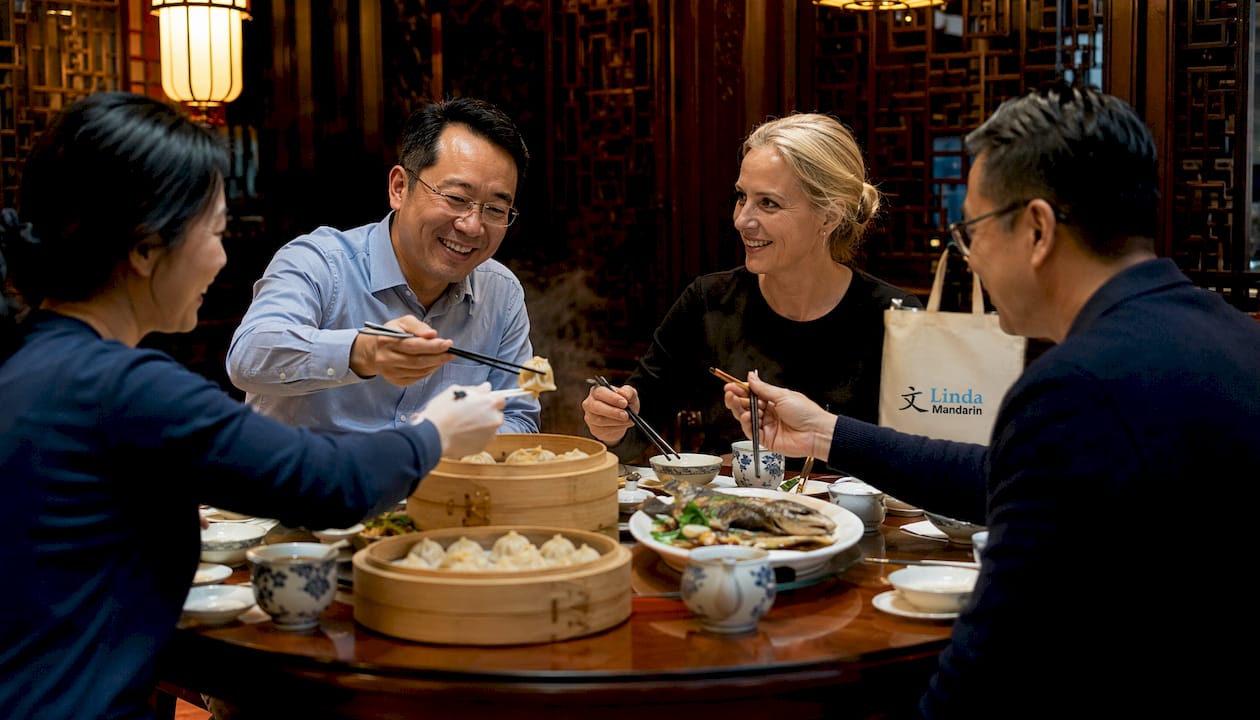
The host typically orders for the table, choosing dishes that reflect care for guests. Refusing food repeatedly reads as rejection of hospitality. Hosts show care by repeatedly offering dishes, and accepting graciously signals that you understand the spirit behind the gesture.
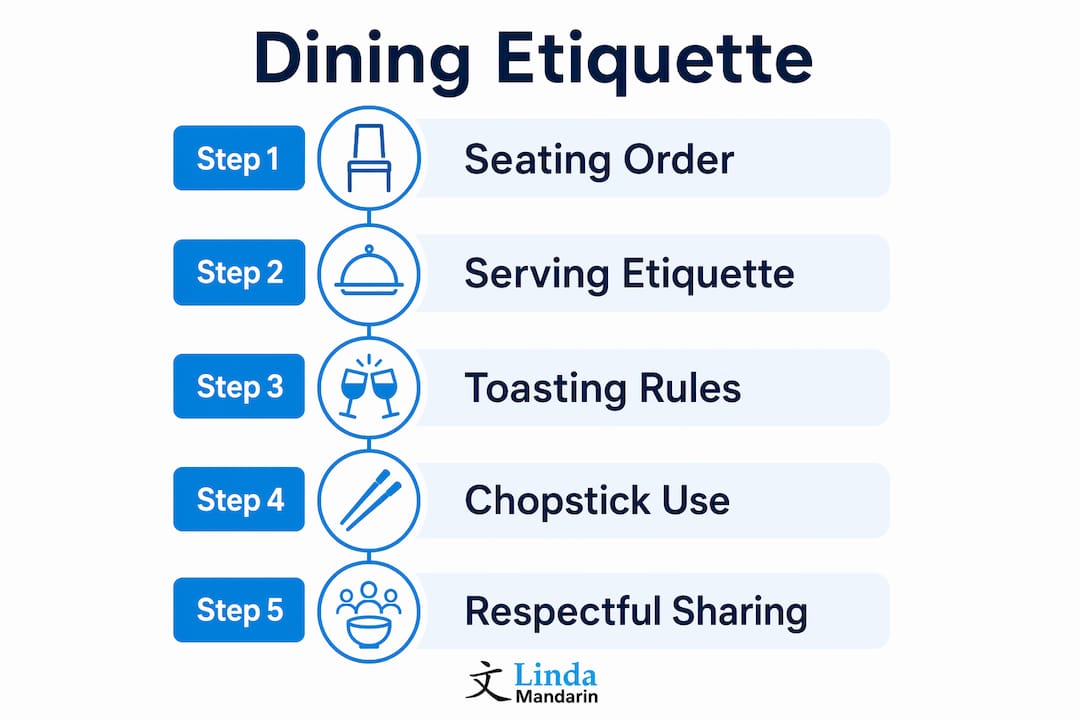
Key dining etiquette points:
- Wait for the host to invite you to eat before starting
- Never stick chopsticks upright in rice, as this resembles incense at a funeral
- Pouring tea for others before yourself shows respect
- Toasting with both hands raised is standard at formal meals
- Leaving a small amount of food signals you were well fed
Pro Tip: Treat any hosted meal as a formal business engagement. Your behavior at the table communicates your character more directly than anything you say in a meeting room.
Why in-group vs. out-group dynamics shape every interaction
Chinese reserved behavior toward strangers is one of the most misunderstood cultural dynamics for Western professionals. It is not unfriendliness. It reflects a deeply embedded social structure where trust, openness, and loyalty are reserved for the in-group, which includes family, close colleagues, and long-term associates.
Until you move from out-group to in-group, expect guarded responses, indirect answers, and limited personal disclosure. This is normal. Pushing for directness too early signals social inexperience. The shift happens through shared meals, small favors, and consistent follow-through over time.
Communication styles tied to this dynamic:
- Indirectness: disagreement is expressed through hesitation, not refusal
- Silence: a pause often signals discomfort or polite rejection
- Face-saving: criticism is never delivered publicly
- Deflection: “I’ll consider it” usually means no
Understanding Chinese communication styles means learning to read what is not said as much as what is.
How 5,000 years of philosophy still shapes modern Chinese behavior
Modern China runs on cutting-edge technology layered over a philosophical foundation that is roughly 5,000 years old. Ignoring that history makes it genuinely harder to form deep professional relationships, because the values driving behavior today trace directly back to Confucius, Laozi, and the Buddhist traditions that entered China in the first century CE.
Core philosophical influences:
- Confucianism: Emphasizes hierarchy, filial piety, social harmony, and moral duty. Shapes how people relate to authority, elders, and colleagues.
- Taoism: Promotes balance, flexibility, and living in alignment with natural order. Influences a preference for patience over confrontation.
- Buddhism: Introduced ethical frameworks around compassion, patience, and long-term thinking that permeate social conduct.
Family sits at the center of all three traditions. Filial piety, the Confucian principle of honoring parents and ancestors, is not a cultural relic. It actively shapes career decisions, marriage choices, and daily routines. Asking a Chinese colleague about their parents is a genuine relationship signal, not small talk.
Etiquette as a living expression of respect, not a checklist
Chinese etiquette is not a fixed rulebook. It is a dynamic expression of respect that shifts with context, relationship depth, and setting. Professionals who treat it as a checklist miss the point. The goal is to signal that you understand what the other person values.
Gift-giving is one of the clearest examples. Gifts carry symbolic weight and must be chosen carefully. Clocks, white flowers, and anything in sets of four are associated with death and bad luck. Tea, fruit, or a quality item from your home country works well. Present with both hands. The recipient may not open it immediately, which is a sign of modesty, not indifference.
Business etiquette essentials:
- Exchange business cards with both hands and read the card before putting it away
- Address people by title and surname until invited to use first names
- Never correct someone publicly. Address mistakes privately to preserve face.
- Negotiations move slowly. Patience signals respect, not weakness.
- Avoid hard “no” language. Offer alternatives instead.
How Linda Mandarin builds cultural fluency alongside language skills
Linda Mandarin has been training adult professionals in Mandarin since 2003, with courses that go beyond grammar and vocabulary to cover the cultural context that makes language actually work. The school’s Chinese culture training programs address business etiquette, communication styles, and relationship-building practices directly.
What sets Linda Mandarin apart for professionals:
- Certified native Mandarin instructors fluent in English, so cultural nuance is explained clearly
- Courses structured for real-life communication, not just textbook fluency
- Flexible formats: group classes, private sessions, and online Zoom learning
- Corporate training programs tailored to specific industries and business contexts
- Located at 10 Anson Road, Level 22, International Plaza, Singapore, right above Tanjong Pagar MRT
Pro Tip: Pair your language lessons with Linda Mandarin’s business Mandarin program to build cultural and linguistic fluency together. The two reinforce each other in ways that classroom grammar alone cannot.
Why Chinese festivals matter for your professional calendar
Chinese festivals are not just cultural color. They directly affect business schedules, communication expectations, and relationship-building opportunities. The Spring Festival, or Chinese New Year, is the single most important celebration in Chinese culture. UNESCO recognized it as an Intangible Cultural Heritage, and its social practices center on family reunion, offerings to ancestors, and community harmony.
For professionals, the weeks surrounding Chinese New Year are largely off-limits for major business decisions. The Mid-Autumn Festival in September or October carries similar weight for family gatherings and gift exchanges. The Qingming Festival in April is a time for honoring ancestors, and many professionals travel home. Knowing these dates prevents scheduling conflicts and shows cultural awareness that Chinese counterparts notice and appreciate.
How hierarchy and seniority govern Chinese professional settings
Hierarchy in Chinese culture is not bureaucratic formality. It is a Confucian value embedded in every interaction. Seniority determines who enters a room first, who speaks first in a meeting, and whose opinion carries the most weight in a decision. Skipping over a senior person to address someone junior is a social error that registers immediately.
In meetings, the most senior person typically sets the tone and pace. Disagreeing with them directly is rare and usually avoided. Deference is not weakness. It is the expected signal of respect. When you are the junior party, listening attentively and asking thoughtful questions earns more credibility than asserting opinions early.
Why guanxi is the real infrastructure of Chinese business
Guanxi, the Chinese concept of relationship networks built on trust and reciprocity, is not a soft cultural concept. It is how business actually gets done in Chinese professional contexts. Contracts matter, but relationships determine whether those contracts get honored, renewed, or expanded.
Building guanxi takes time and shared experience. Meals, small favors, introductions, and consistent follow-through all contribute. Trying to accelerate it through purely transactional gestures typically backfires. The person who invests in the relationship before needing anything from it is the one who earns real access.
For Mandarin learners, understanding guanxi changes how you approach every interaction. A conversation that seems off-topic is often relationship-building. A dinner invitation is an investment. Treating these moments as incidental misses what they actually are.
Key Takeaways
Cultural fluency is the skill that makes Mandarin language ability actually work in professional and personal Chinese contexts.
| Point | Details |
|---|---|
| Guanxi requires time | Build relationships through shared experiences and reciprocity before expecting business outcomes. |
| Face governs communication | Address mistakes privately and avoid public confrontation to protect social standing. |
| Dining is a business ritual | Accepting hospitality at the table signals cultural competence and builds trust. |
| Philosophy shapes behavior | Confucian values of hierarchy, filial piety, and harmony actively drive modern professional conduct. |
| Festivals affect business timing | Major holidays like Chinese New Year pause decision-making and create key relationship-building windows. |
FAQ
What is the most important concept in Chinese business culture?
Guanxi, the network of trust-based relationships built through reciprocity and shared experience, is widely considered the foundation of Chinese business success. Without it, even strong proposals struggle to gain traction.
How does face (miànzi) affect professional interactions?
Face refers to social standing and reputation. Publicly embarrassing someone causes them to lose face, which damages the relationship permanently. Always address corrections or disagreements in private.
Why do Chinese professionals communicate indirectly?
Indirectness protects face for both parties and reflects the in-group/out-group dynamic, where open disagreement with someone outside your trusted circle is socially risky. Silence and hesitation often signal a polite no.
How should I approach gift-giving in Chinese business settings?
Avoid clocks, white flowers, and sets of four, as these carry associations with death. Tea, fruit, or a quality item from your home country are safe choices. Present with both hands and do not expect the gift to be opened immediately.
How do Chinese festivals affect business schedules?
Chinese New Year effectively pauses major business decisions for several weeks. The Mid-Autumn Festival and Qingming Festival also shift professional availability. Knowing these dates and planning around them signals genuine cultural respect.