TL;DR:
- Chinese business meeting etiquette emphasizes hierarchy, face, and relationship building through punctuality, respectful seating, and formal titles. Small talk and gift-giving are vital for establishing guanxi, while indirect communication and reading subtle cues help protect reputation. Mastering these practices and adapting in the moment foster long-term partnerships in China.
Chinese business meeting etiquette is the set of cultural protocols and behaviors required for successful professional interactions in China. These protocols go far beyond basic politeness. They reflect deep cultural values around hierarchy, reputation, and long-term relationships. Two concepts sit at the core of every meeting: guanxi (relationship capital) and face (public reputation). Miss either one, and even a well-prepared proposal can stall. Get them right, and you build the kind of trust that Chinese business partners extend over years, not quarters.
What are the core protocols for Chinese business meetings?
Punctuality is non-negotiable. Arriving 10–15 minutes early signals respect for your counterparts and sets a positive tone before a word is spoken. Your Chinese hosts may occasionally arrive late due to schedule demands, but that latitude does not extend to guests.
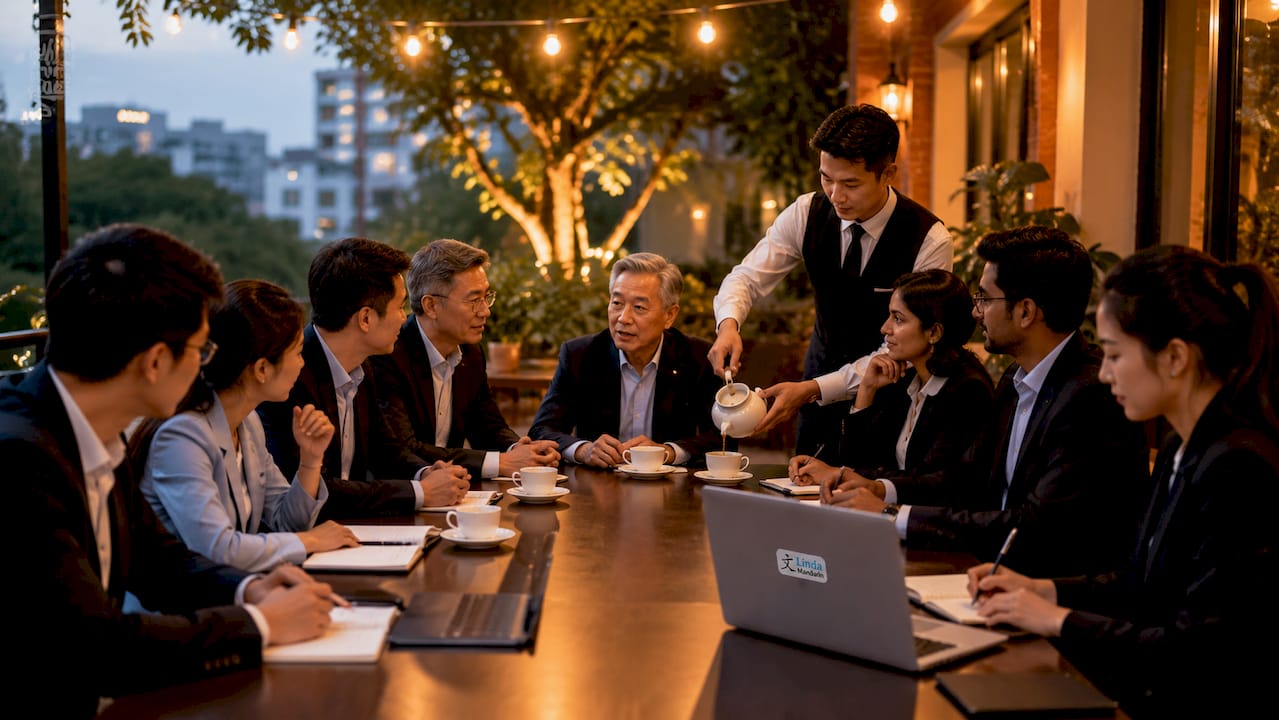
Seating follows a clear hierarchy. Senior members open meetings and lead discussions, while junior staff typically stay silent unless directly addressed. The most senior guest sits opposite the most senior host, usually facing the door. Sit where you are directed, and do not rearrange the setup.
Introductions follow rank order. Address every professional by their formal title and surname. Use titles like Director or Manager rather than first names unless your counterpart explicitly invites informality. This rule applies throughout the meeting, not just at the start.
The meeting itself has a defined structure. The first 5–30 minutes are reserved for small talk and tea service before any business discussion begins. This phase is not filler. It is the relationship-building ritual that signals you are a trustworthy long-term partner, not just a transactional visitor.
Interpreter placement matters more than most professionals realize. Seat your interpreter beside your delegation and brief them thoroughly before the meeting. Relying on your counterpart’s staff for interpretation risks filtered or softened communication that does not serve your interests.
Key protocols at a glance:
- Arrive 10–15 minutes early
- Sit according to seniority, facing the door if you are the senior guest
- Use formal titles and surnames throughout
- Allow 5–30 minutes for small talk and tea before business begins
- Bring your own interpreter and brief them in advance
Pro Tip: Prepare two or three neutral conversation topics before the meeting, such as recent travel, local cuisine, or general observations about the city. This makes the small talk phase feel natural rather than forced.
How to handle business cards and communication styles
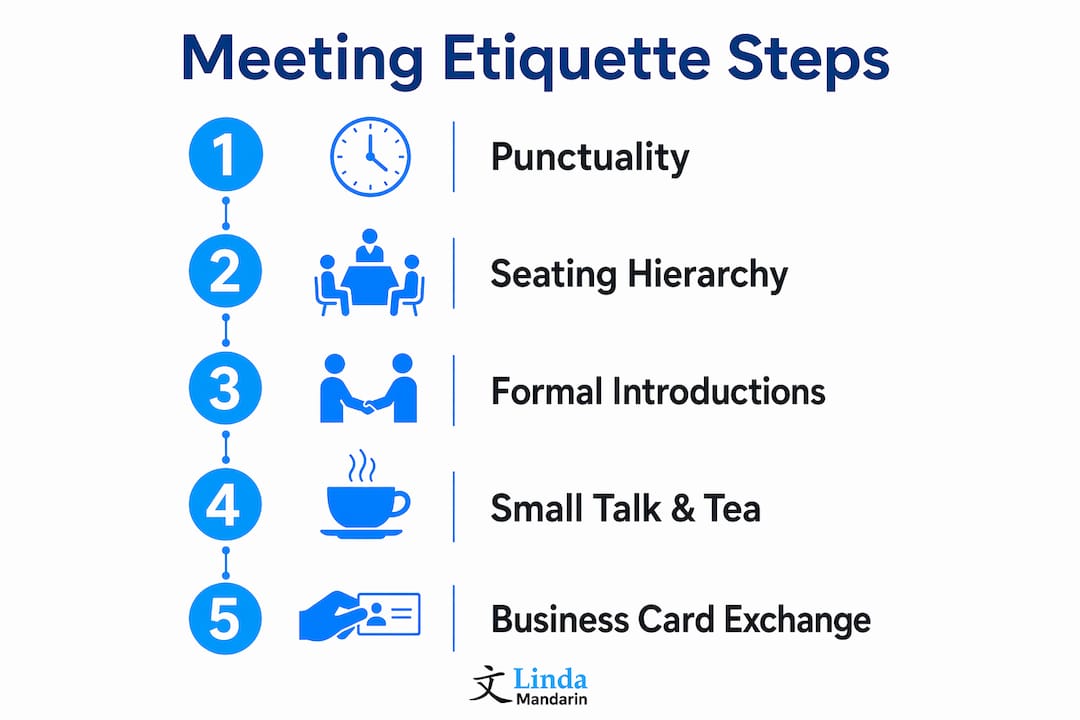
The business card exchange is one of the most visible examples of Chinese business etiquette in practice. Present and receive cards with both hands, Chinese side facing the recipient. Examine each card carefully for several seconds before placing it on the table in front of you, arranged in the seating order of your counterparts. Never write on a card, bend it, or pocket it immediately. These actions signal disrespect.
Communication style in Chinese meetings rewards patience and attentiveness. Direct disagreement is rare and considered damaging to the relationship. Use indirect phrases to soften differing opinions, such as “that is an interesting perspective” before offering an alternative view. This approach protects face for both parties and keeps the conversation productive.
Silence carries meaning. A pause after a question is not confusion. It often signals that your counterpart is considering their response carefully. Resist the urge to fill silence immediately. Non-verbal cues such as a slight nod, a smile, or a shift in posture can communicate more than words in this context.
Digital communication has added a new layer to meeting etiquette. The WeChat QR code scan at the end of a meeting now functions as the modern digital handshake. Have your QR code ready on your phone before the meeting ends. Connecting on WeChat signals that you intend to maintain the relationship beyond the conference room.
Card exchange and communication essentials:
- Present and receive cards with both hands, Chinese side facing out
- Place cards on the table in seating order; never pocket them immediately
- Use indirect language to express disagreement
- Read silence as thoughtful consideration, not confusion
- Have your WeChat QR code accessible for post-meeting connection
What role does guanxi play in Chinese business meetings?
Guanxi is fundamental to Chinese business success. Meetings in China focus less on closing immediate deals and more on assessing the long-term potential of a partnership. Your counterparts are evaluating whether you are someone they can trust over years. Understanding the importance of guanxi before you walk into a meeting changes how you approach every interaction.
Small talk and shared meals are the primary tools for building guanxi. Showing genuine curiosity about your counterpart’s background, region, or professional journey builds rapport faster than any polished presentation. The relationship you build in the first 20 minutes of a meeting often determines how receptive your counterparts will be to your proposals.
Gift-giving is a recognized part of relationship-building, but it carries real risk. Clocks, umbrellas, and sets of four all carry negative symbolic meanings in Chinese culture and should never be given. Safe choices include high-quality branded pens or premium imported goods. The quality of the gift signals how much you value the relationship.
Present gifts with both hands and a brief, modest explanation of why you chose the item. Do not expect the recipient to open the gift immediately. Chinese etiquette often involves setting gifts aside to open privately, which avoids any awkward reaction in public.
Gift-giving guidelines:
- Avoid clocks (associated with death), umbrellas (associated with parting), and anything in sets of four
- Choose high-quality branded pens, premium teas, or imported specialty goods
- Present with both hands and a brief, sincere explanation
- Do not pressure the recipient to open the gift immediately
- Frame the gift as a token of appreciation, not a transaction
Pro Tip: Research your counterpart’s home region before selecting a gift. A premium product from a region they have ties to shows a level of personal attention that builds guanxi faster than any generic corporate gift.
What are common mistakes in Chinese business meeting etiquette?
Even well-prepared professionals make avoidable errors. The mistakes below consistently damage trust and slow deal progress.
- Rushing into business. Skipping the small talk phase signals impatience and disrespect. Always allow the host to guide the transition from social conversation to business discussion.
- Breaking hierarchy. Speaking out of turn or directing questions to junior staff before senior members have spoken disrupts the meeting’s social order. Always address the most senior person first.
- Giving inappropriate gifts. Clocks, umbrellas, and items in sets of four are serious cultural missteps. Green hats also carry negative connotations and should be avoided.
- Public disagreement. Contradicting a counterpart openly, especially in front of their team, causes a loss of face that can end a business relationship. Always disagree privately and indirectly.
- Mishandling business cards. Writing on a card, bending it, or immediately stuffing it in your pocket communicates carelessness. Treat every card as a professional document.
- Ignoring toasts. At business dinners connected to meetings, ignoring a toast or refusing to participate is considered rude. You do not need to drink alcohol, but you must acknowledge the gesture.
Understanding Chinese business culture and etiquette at a structural level helps you avoid these errors before they happen, rather than recovering from them after the fact.
Key Takeaways
Mastering Chinese business meeting etiquette requires consistent attention to hierarchy, face, guanxi, and communication style across every stage of the meeting.
| Point | Details |
|---|---|
| Punctuality signals respect | Arrive 10–15 minutes early; lateness damages trust before the meeting begins. |
| Hierarchy governs every interaction | Address senior members first, follow seating protocol, and never speak out of turn. |
| Business cards are formal documents | Use both hands, examine each card carefully, and place it on the table in seating order. |
| Guanxi precedes business | Invest in small talk and relationship-building before any deal discussion begins. |
| Indirect communication protects face | Use softening phrases to express disagreement and read silence as thoughtful consideration. |
What I’ve learned about reading the room in Chinese meetings
Most guides tell you what to do. Fewer tell you what to watch for. After years of observing professionals navigate Chinese business meetings, the single biggest differentiator is not preparation. It is adaptability in the moment.
The professionals who build the strongest relationships are the ones who notice when the energy in the room shifts. If your senior counterpart leans back and goes quiet, the meeting is likely wrapping up, regardless of what is on the agenda. If tea is refilled without being asked, the host is signaling comfort. These cues are subtle, but they are consistent.
Follow-up via WeChat within 24 hours of a meeting is not optional if you are serious about the relationship. A brief message expressing appreciation for the meeting and referencing something specific from the conversation shows attentiveness. Generic follow-ups get ignored. Specific ones get remembered.
The professionals who struggle most are those who treat Chinese business meetings as a checklist exercise. They arrive early, hand over cards correctly, and sit in the right seat, then wonder why the relationship never deepens. The protocols matter, but they are the floor, not the ceiling. Authentic curiosity about your counterpart’s goals, patience with the pace of decision-making, and cultural humility in moments of uncertainty are what actually build lasting partnerships.
Continuous learning is not a soft recommendation. The role of language in business success is direct and measurable. Professionals who invest in even conversational Mandarin signal a level of commitment that no business card or gift can replicate.
— Paul
Build your confidence before the next meeting
Knowing the protocols is the starting point. Applying them fluently under pressure requires both cultural understanding and language ability.

Linda Mandarin has trained business professionals in Singapore since 2003, with programs designed specifically for adult learners in corporate environments. The corporate Chinese Mandarin training program covers practical communication skills alongside the cultural context that makes those skills work in real meetings. For professionals who want to go deeper into cultural norms, the Chinese culture training program addresses guanxi, face, and meeting etiquette directly. Classes are available in person at International Plaza above Tanjong Pagar MRT, and online via Zoom for flexible scheduling.
FAQ
What is Chinese business meeting etiquette?
Chinese business meeting etiquette is the set of cultural protocols governing professional interactions in China, including punctuality, hierarchy, card exchange, communication style, and gift-giving. These practices reflect core values around guanxi and face.
How should I exchange business cards in a Chinese meeting?
Present and receive cards with both hands, Chinese side facing the recipient. Examine each card carefully before placing it on the table in seating order, and never write on or immediately pocket a card.
What should I wear to a Chinese business meeting?
Conservative, formal attire is the standard for Chinese business meetings. Dark suits for men and formal business wear for women signal professionalism and respect for the occasion.
How do I avoid losing face in a Chinese meeting?
Avoid public disagreement, interrupting senior members, or reacting negatively to gifts or proposals in front of the group. Use indirect language to express differing opinions and address sensitive topics privately whenever possible.
Why is small talk so important in Chinese business meetings?
The first 5–30 minutes of a Chinese meeting are dedicated to small talk and tea service as a relationship-building ritual. Skipping this phase signals impatience and undermines the trust your counterparts are assessing before any business discussion begins.